


Hot Tub Water Care Made Simple: A Complete Guide With the Starter Chemical Kit
Xavier LabelleA hot tub in the garden is meant to be your space for relaxation, recovery and year-round wellness. To keep the water clear, hygienic and pleasant to soak in, though, you need a structured approach to water care. Plenty of new owners underestimate this until the water turns cloudy, foam appears or the skin starts complaining.
Water care actually follows a fairly clear system. Once you understand how alkalinity, pH and chlorine work together, you can head off most problems before they start.
This guide explains hot tub water chemistry in plain terms — the right order to do things in, the typical issues to watch for, and how a starter chemical kit fits in.
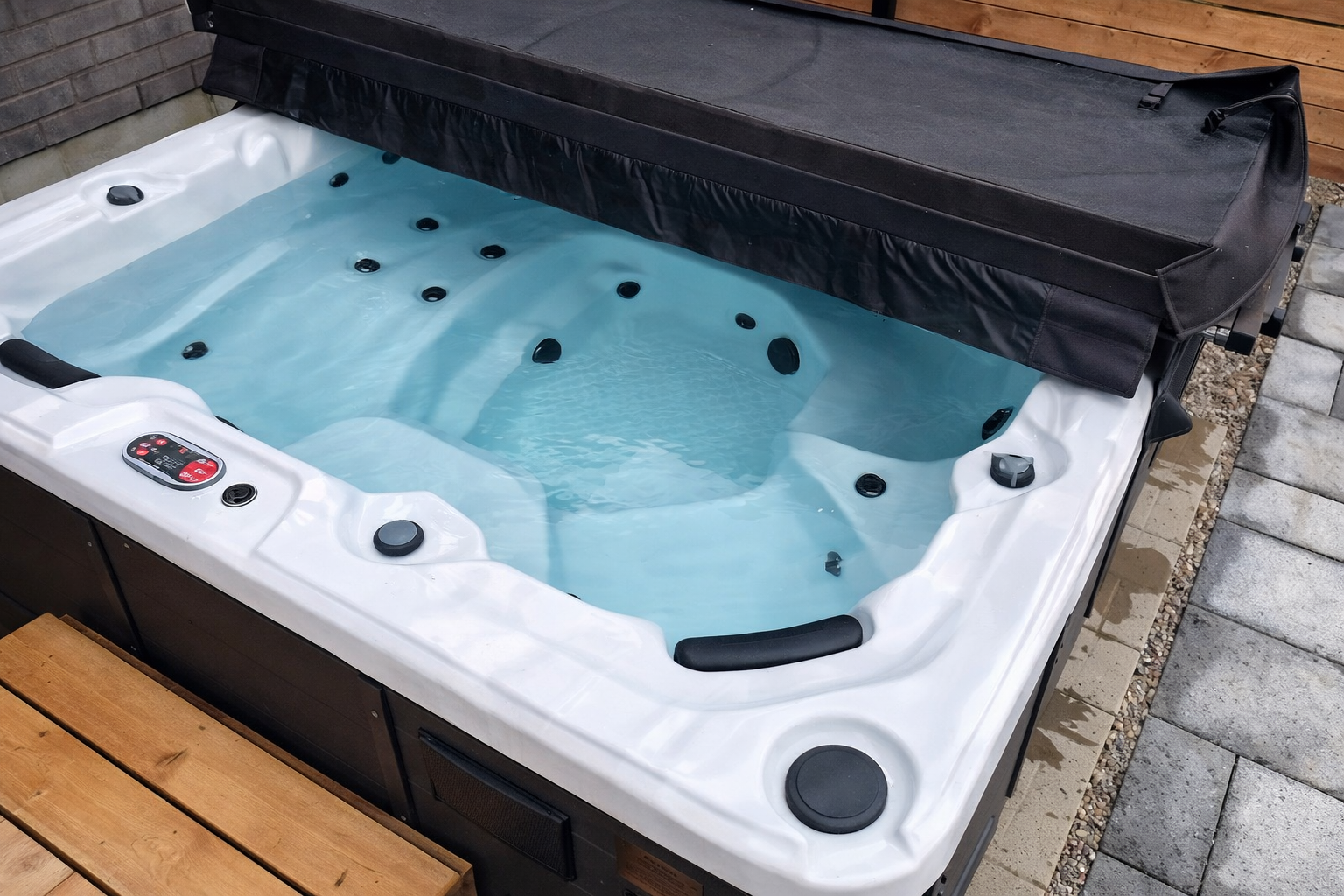
What does "hot tub water care" actually mean?
Water care covers everything you do to keep your hot tub water:
- Hygienically safe
- Chemically stable
- Gentle on the spa hardware
- Visually clear
Spa water is warm and gets used regularly, which means organic load builds up from:
- Skin particles
- Body oils
- Cosmetic residue
- Things blowing in from outside
To stop that turning into bacteria or cloudiness, three core readings need to stay in balance.
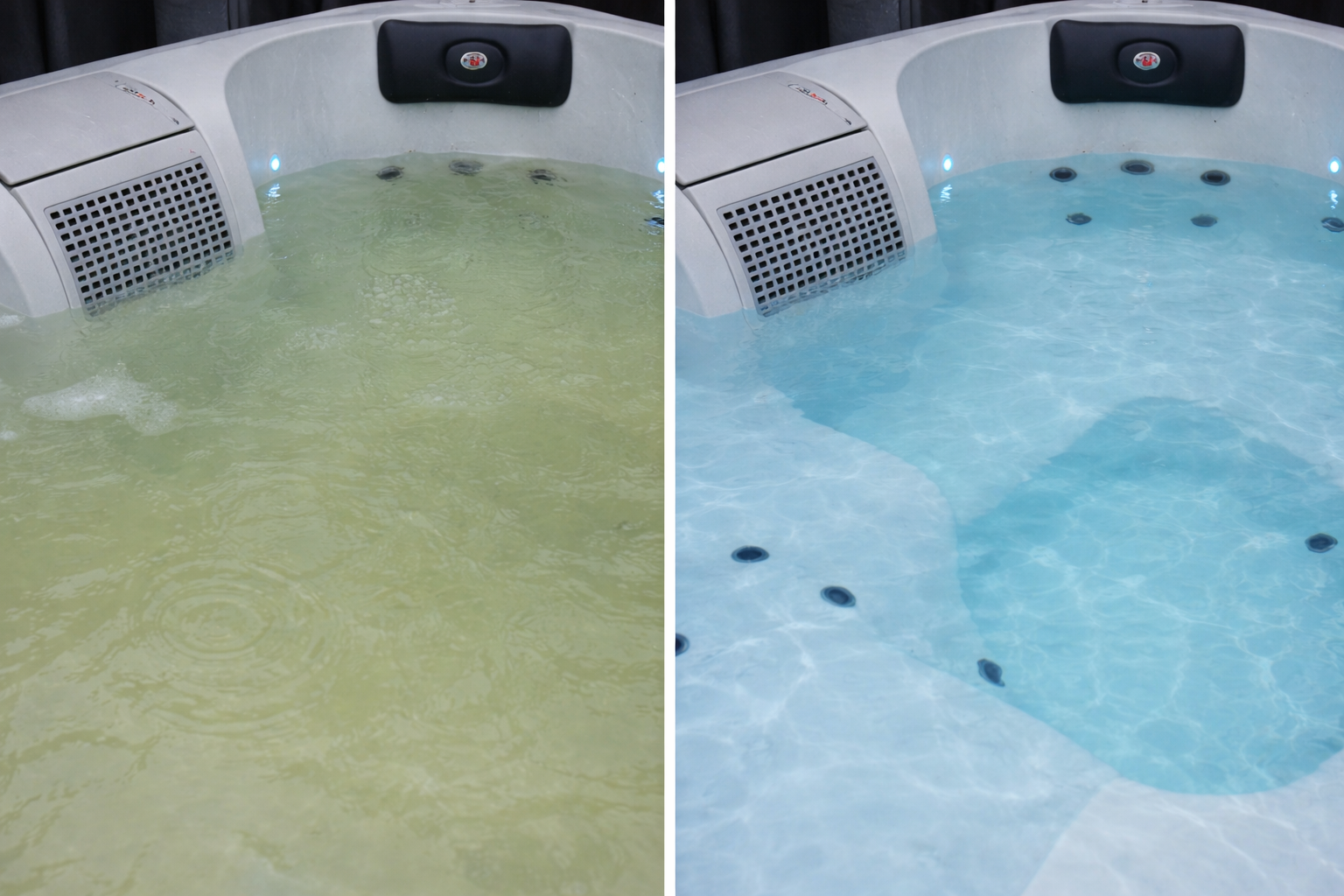
The three key water readings
1. Total alkalinity — the stability buffer
Total alkalinity stabilises pH. It works as a buffer and stops big swings.
Ideal range: 80–150 ppm
If alkalinity is too low:
- pH swings around a lot
- Water becomes unstable
If it's too high:
- pH is hard to correct
- Scale can build up
That's why alkalinity is set first — not pH.
2. pH — the basis for effective disinfection
The ideal pH range is 7.2–7.6. Only in that band does chlorine work properly.
pH too low:
- Skin and eye irritation
- Corrosion of metal parts
pH too high:
- Reduced chlorine effectiveness
- Cloudy water
- Scale formation
Use pH up or pH down to bring it into range.
3. Chlorine — the active disinfection
Chlorine breaks down bacteria and organic residue.
Recommended range: 1.0–1.5 ppm
Dosing:
- 10g per m³ after each soak
- Run the circulation pump for 10 minutes
- Re-test the water
It's only when chlorine, pH and alkalinity are all in balance that the water stays consistently clear.
The Canadian Spa Starter Chemical Kit — everything for a safe start
For the first fill, a coordinated kit takes a lot of the guesswork out. The Canadian Spa Starter Hot Tub Chemical Kit includes:
- Chlorinating granules
- pH up
- pH down
- Alkalinity booster
- 3-way test strips
- Application guide
That combination covers all the basic steps of water care.
Why it matters: a lot of beginners try to correct pH straight away without checking alkalinity, which produces unstable readings. A complete starter kit prevents that mistake.
How the kit and the water test app work together
Alongside the chemicals, Canadian Spa offers a free water test app.
Step 1 — download the app: from the Apple App Store or Google Play, free to install.
Step 2 — select your hot tub model: tell the app which spa you're using.
Step 3 — test your water: with 3-way test strips, measure chlorine, pH and alkalinity.
Step 4 — enter the readings: punch the test strip values into the app.
Step 5 — get a dosing recommendation: the app calculates how much chlorine, pH up/down or alkalinity booster you need.
That makes water care unusually simple, even with no prior knowledge.
The right order when you refill
To get to stable readings, follow this sequence:
- Fill the hot tub
- Test the water
- Set alkalinity (80–150 ppm)
- Correct pH (7.2–7.6)
- Dose chlorine (1.0–1.5 ppm)
- Run circulation
- Re-test
This structure heads off about 90% of typical water issues.
FAQ — common water care questions
Why is my hot tub water cloudy?
Cloudy water usually comes from:
- Organic contamination
- High pH
- High alkalinity
- Inadequate filtration
If pH runs too high, chlorine stops working effectively and organic matter stays in the water, creating cloudiness.
Fix: set pH to 7.2–7.6, check and correct alkalinity, run a shock treatment, and clean or replace the filter.
Why is foam appearing?
Foam comes from oils and cosmetic residue being whipped up by the jets. Common causes: sun cream, lotion, leftover detergent.
Fix: use a foam control product, stabilise chlorine and refill the water if needed.
Why is scale forming?
Scale forms with: high pH, high alkalinity, high calcium content. If pH stays above 7.6, deposits build up on surfaces and inside the pipework.
Fix: bring pH down, adjust alkalinity, and consider a partial water change.
Why are my eyes stinging or my skin irritated?
Common causes: pH too low, unstable readings, combined chlorine.
Fix: correct pH, run a shock treatment, and stabilise the chlorine level.
Why doesn't the test strip show any chlorine?
If chlorine is being consumed instantly, there's usually a high organic load.
Fix: run a shock treatment, check pH, check alkalinity, and re-test.
Wrapping up
Water care isn't a complicated chemistry lab. It's a clear loop: understand → test → stabilise → adjust → check. With a Canadian Spa Starter Chemical Kit and the matching app, the whole process becomes structured, simple and repeatable — and your hot tub stays the relaxing space it's supposed to be.
Available on our UK website: