


Hot tub cover lifters
Lift a wet, insulated cover like it weighs nothing.
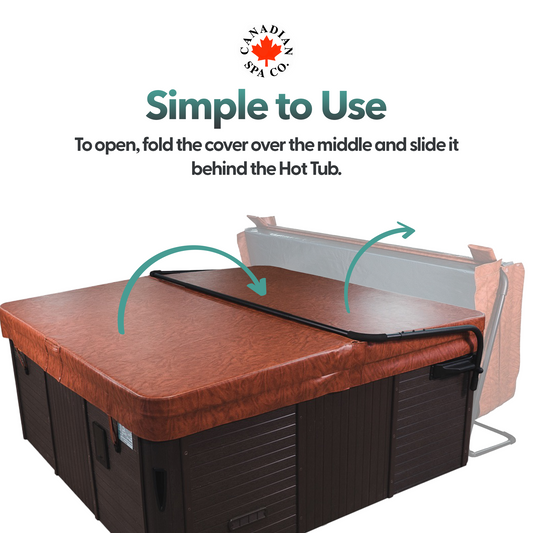
A 5″ tapered hot tub cover soaked with rain can weigh 40–50kg. Dead-lifting it off a 7-foot tub slowly wrecks your back and slowly wrecks the cover. Ours use pure mechanical leverage to fold the cover out of the way in one motion — no gas struts, no hydraulics, no electronic assist. Fewer parts to fail in a wet British garden, and it's the leverage doing the real work on the ‘assisted’ lifters anyway. Four mount styles in UK stock — top, bottom, cradle or basket.
Why a cover lifter isn't optional
If you'll use the tub more than once a week, a lifter pays for itself in the first month — in the back you don't hurt, the cover you don't drag across the patio, and the routine you actually stick to. Here's what it does in practice.
-
Protects your back
A 5″ foam-core cover, wet from a week of British weather, is 40–50kg of dead weight at chest height on the far side of a 7-foot tub. It's the single most common way hot tub owners hurt themselves. Our leverage geometry shifts almost all of that load off you, so a two-handed grunt becomes a one-handed fold.
-
Pure leverage — no struts to seize or snap
We don't fit gas struts, hydraulics, pneumatics or electronic assist. The entire mechanism is engineered mechanical leverage — the same principle that does most of the work on the ‘assisted’ lifters anyway, with the fiddly, failure-prone add-ons stripped out. The things that break first on the premium lifters (struts that leak their gas, hydraulic seals that perish in UK weather, actuators that corrode) simply aren't on ours. Less to fail, more to last.
-
Makes the cover last 3–5 years longer
A cover dragged on and off the tub tears its stitching, scuffs the marine vinyl, and soaks its skirt flap on wet grass. A cover folded cleanly by a lifter does none of those things. On a £400–£600 replacement cover, a £150 lifter is cheap insurance — and several manufacturers actually require one for full warranty.
-
Solo use in under 10 seconds
Without a lifter, getting the cover off a 5–6 seat tub is realistically a two-person job — or one person managing a heavy, awkward lift they shouldn't be doing. With a lifter it's one hand, one motion, ten seconds. That's the difference between a tub you use on a Tuesday evening and one you only use on weekends.
-
Four mount styles — fits any garden
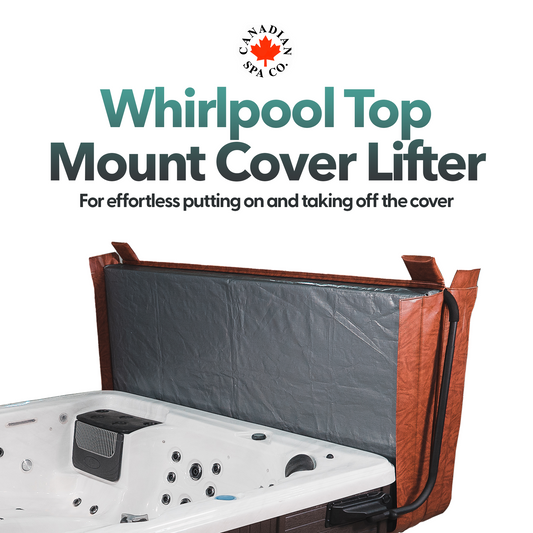
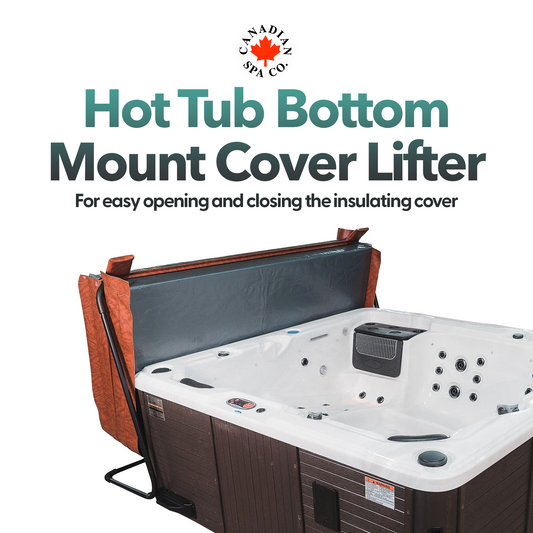
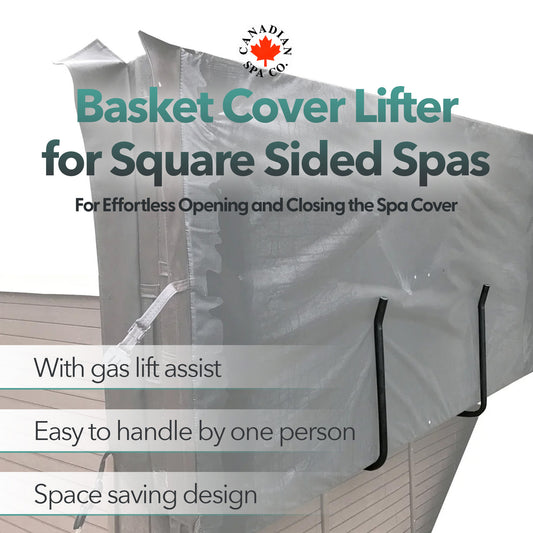
Top mount is the standard pivot arm (needs ˜12″ clearance behind the tub). Bottom mount drops the pivot lower for cabinets where the top rail isn't flat. Cradle fits round, oval and portable tubs that don't take a rigid bracket. Basket keeps the folded cover inside a rear cradle rather than over the edge — tidier and lower profile.
Cover lifters Buying Advice
Use this collection to compare specifications, delivery options, and aftercare before you buy. Contact our UK support team for help choosing the right model for your space and budget.
-

 Reduced
 -
 Reduced
 -
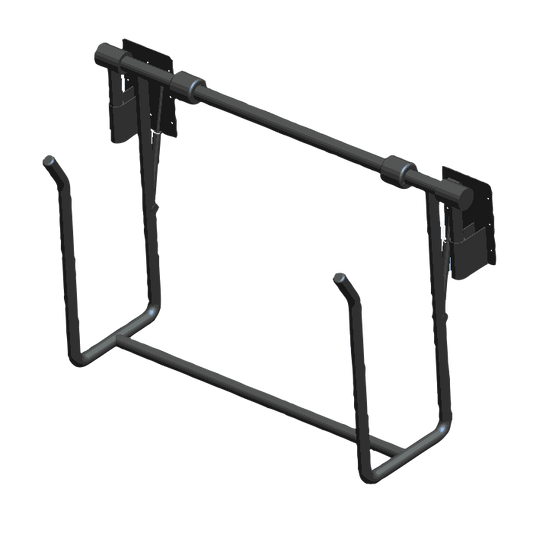
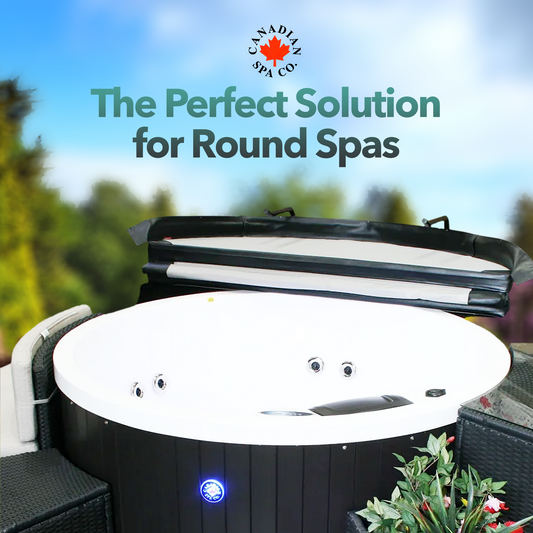
Cradle Spa Cover Lifter for Round, straight, and other odd sizes
Regular price £150.00Regular price£300.00Sale price £150.00Reduced -
 Reduced
 -

 More Stock on the Way
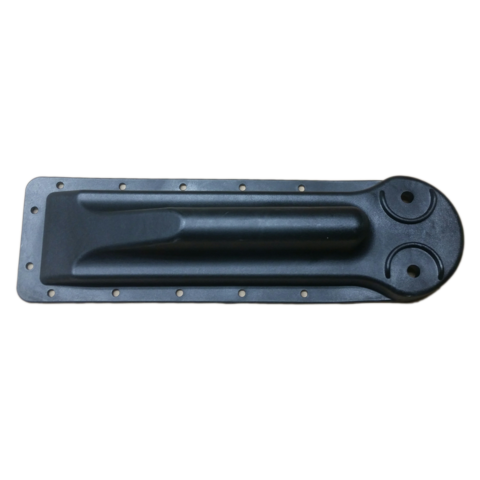
COVER LIFTER BRACKET (ABS)
Regular price £40.00Regular price -
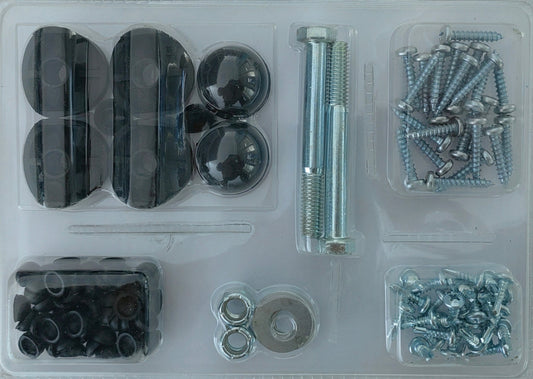
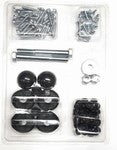
Hardware Fixing Kit: Top Mount Lifter & Bottom Mount lifter
Regular price £20.00Regular price



Cover lifters: UK Buying Guide
This collection is part of the Canadian Spa Company UK range of hot tubs, swim spas, saunas and spa essentials. Compare options by fit for your space, running costs, insulation, warranty and ongoing maintenance requirements to make a better long-term choice.
If you need help choosing the right model or part, our support team can guide you on compatibility, delivery and aftercare.
Why customers add one
Where a cover lifter earns its keep
A lifter isn't a luxury accessory — it's the one add-on a hot tub owner is most likely to wish they'd bought on day one.
-
Turns the tub into a daily routine, not a weekly production
The single biggest predictor of whether a new hot tub owner is still using their spa three years in is how easy the cover is to handle. A lifter removes the friction: it's no longer a decision to get in, it's just lifting the lid. Customers who add one tell us they use the tub two to three times as often.
-
Keeps your cover warranty intact
Several cover manufacturers (ours included on some tiers) either require or strongly recommend a lifter for the full warranty term — because without one, the cover is being folded, dragged and bashed in ways it wasn't designed for. A lifter shifts that wear from "inevitable" to "doesn't happen."
-
15–30 minute DIY install
Top-mount and bottom-mount lifters fit with four bolts per side and an adjustable bracket height. You'll need a spirit level, a power drill, a 13mm spanner and someone to hold the other end during the final lift. No electrician, no drainage of the tub, no specialist tools. Instructions ship with every lifter; our replacement brackets live in the same category.
-
Folded cover sits behind the tub, out of the garden
Without a lifter, the cover either stays on the patio, leans against a fence, or ends up on the grass — none of those are good for it or for the view. A pivot or basket lifter stows the folded cover immediately behind the tub at roughly cabinet height, so the footprint of the open tub barely changes.
-
Fits most hard-shell spas, not just Canadian Spa
Our lifters are sized to common UK hard-shell cabinet widths and fit spas from most major brands — Canadian Spa, Jacuzzi, Hotspring, Arctic Spas, Aegean, Clearwater and the rest. The cradle model also fits many round, oval and foam-sided tubs that a bracket-style lifter won't. Inflatable spas are the one category that generally won't take a standard lifter (see FAQ).
-
UK stock, quick despatch
All four lifter styles, the ABS replacement bracket, and the hardware fixing kit are held in our Redhill, Surrey warehouse. Please allow up to 10 working days as a realistic ceiling, though most in-stock lifters ship sooner than that. Exact despatch timing is on each product listing.
Common questions
Cover lifter FAQ
Will a cover lifter fit my hot tub?
For any rectangular or square hard-shell spa with a flat cabinet top rail, yes — almost always. Our top-mount and bottom-mount lifters are sized to common UK hard-shell cabinet widths and fit spas from Canadian Spa, Jacuzzi, Hotspring, Arctic Spas, Aegean, Clearwater and most other major brands. For round, oval or foam-sided tubs, the cradle lifter is the answer instead — it doesn't need a rigid cabinet to bolt onto. Measure your tub's length, width and cover thickness, and check each listing's fit notes before ordering.
How much clearance do I need behind the tub?
For a standard top-mount pivot lifter, plan on roughly 30cm (12 inches) of clear space behind the tub when the cover is folded. That's the swept height the folded cover needs to pivot back through. Bottom-mount lifters swing through a similar arc but lower down. A basket lifter is the lowest-clearance bracket style — the cover stands vertically in a rear cradle rather than folding over the edge. For zero-clearance setups (tub against a wall or fence), the basket or cradle models are the options worth checking.
Top mount vs bottom mount — which do I need?
Top mount is the default: brackets bolt to the top edge of the cabinet, the pivot arms sit at cover height, and the lifter is out of the way when the cover's on. This is what 90% of spas take. Bottom mount is the answer when the top of your cabinet is curved, trimmed with lighting, has a waterfall or a slanted cap, or is too narrow for a top bracket to bolt into cleanly. It sits lower on the cabinet side and uses the same pivot action. If you have a choice, top mount is tidier.
What about round, oval or odd-shaped tubs?
A rigid bracket-and-pivot lifter needs a flat, straight-sided cabinet to bolt onto. Round and oval tubs don't give it one — which is why the cradle lifter exists. Cradle lifters clamp the cover between two foam-padded arms that carry it rearwards over the tub rim without needing to bolt into the cabinet at all, so they fit round spas, portable spas and some foam-sided tubs that would otherwise have no lifter option. See our cradle cover lifter for specifics.
Can I use one with an inflatable hot tub?
Generally no — inflatable spas don't have a rigid cabinet to bolt a bracket into, and their covers are thin insulated pads, not 5″ foam-cored lids that need a mechanical assist. The cover of an inflatable tub is light enough for one person to handle unaided; a lifter would add cost, footprint and an attachment point the tub wasn't designed for. If you're shopping specifically for an inflatable spa cover accessory, see the inflatable hot tubs collection — the supplied covers and strap systems are the standard answer there.
Is installation a DIY job?
Yes for most owners. A top-mount or bottom-mount lifter is four through-bolts per side (supplied), a bit of careful levelling, and about 15–30 minutes with a power drill and a 13mm spanner. The cradle lifter is quicker still — it assembles around the tub without drilling into the cabinet. You do not need to drain the tub, and there is no electrical work involved. An extra pair of hands for the final cover lift is useful; a full-time helper isn't required.
Will a lifter damage my cover or the cabinet?
Properly installed, no — that's exactly the opposite of the point. The brackets distribute lift evenly across the fold line of the cover rather than stressing one corner, and the pivot arms keep the cover away from the cabinet on the way up and down. The damage risk is mostly with wrong-size brackets (too narrow a lifter on a wide cabinet over-stresses the cover hinge; too wide and the arms fight each other). Measure first, then order the right-sized lifter for your spa.
Is there a weight limit?
Our standard top-mount and bottom-mount lifters are rated for covers up to roughly 45–50kg saturated — which covers most 5″ tapered hot tub lids on spas up to ~90″ long. Swim spa covers, and some extra-large family spa covers, can exceed that and need a swim-spa-specific lifter rather than a standard hot tub unit. If you're unsure whether your cover is within range, the easiest test is simply whether it's a hard-shell hot tub cover (yes) or a swim spa cover (check the swim spa-specific range).
Can I fit one to my swim spa?
Not the lifters in this collection. Swim spa covers are substantially heavier and longer than hot tub covers, and the cover is usually split into two halves sat on purpose-built swim-spa lifters. If you're swim-spa shopping, those lifters are generally specified against the specific tub; drop us a line and we'll point you at the right model.
What about strong winds?
A folded cover on a pivot lifter is a large sail sitting a metre off the ground — in genuinely high winds (50mph+), we'd always recommend lowering the cover back over the tub before leaving it, lifter or no lifter. For day-to-day British weather, the lifters are perfectly stable. If your garden is particularly exposed, a basket-mount lifter sits the folded cover lower and within a protective cradle, which fares better in gusty conditions than a high pivot.
Do I really need one on a new hot tub?
For a 2–3 person tub with a light cover that you'll use occasionally, you can reasonably get by without one. For any 4+ seat spa, any 5″ cover, or any tub you plan to use more than once a week through a UK winter — yes, you'll want one. The second most common regret we hear from new spa owners (after not insulating the base properly) is not ordering a lifter with the tub. If you're within the first month of ownership, adding one now is cheaper than the next cover you'll replace early because of drag damage.
Can I buy just the replacement bracket or hardware?
Yes — we stock the ABS replacement bracket (for lifter arms that have snapped or weathered) and the hardware fixing kit (bolts, washers and fittings for both top- and bottom-mount lifters). Both are useful if your existing Canadian Spa lifter is mostly fine but has a single failed component, or if you're refitting a lifter that's been on the tub for years.
How quickly can you deliver?
Please allow up to 10 working days as a ceiling, though most in-stock lifters land well inside that from our Redhill, Surrey warehouse. Exact timing is on each product listing. Cover lifters ship flat-packed in a single carton and are parcel-courier friendly — no pallet, no two-person lift required at delivery.
What's the warranty?
Our cover lifters carry a 12-month manufacturer warranty on the frame and the pivot mechanism against manufacturing defects. Fixings and consumables (bolts, cover straps that ship alongside) are not warranty items — they're stocked separately in the hardware fixing kit. Full terms on each product listing.
UK buying guide
Hot tub cover lifters UK — buying guide
A cover lifter isn't a luxury — it's the accessory most hot tub owners wish they'd bought on day one. It protects your back, your cover and your routine. This guide covers the four mount styles we stock, why ours are built on pure leverage rather than gas struts, and the install realities before you order.
Why we build lifters without gas struts, hydraulics or electronic assist
Walk round a hot tub showroom and you'll see cover lifters advertised with all sorts of ‘assist’ features bolted on: gas struts, hydraulic cylinders, pneumatic arms, electric actuators. It's good marketing and it justifies a higher price point. It also misses the point.
The thing that actually lifts the cover on any of those units is the geometry of the arm — the leverage. The assist component is a helping hand for the first few inches of travel; after that, the lever is doing the work whether the strut is there or not. We know this because every time one of those lifters comes back to us with a broken strut, customers describe the same thing: it still lifts the cover, it just doesn't feel as smooth.
So we skip the assist entirely. Our lifters are pure engineered leverage — a mechanical advantage designed into the arm and pivot, nothing more. The benefits of that are boring and durable:
- Nothing to seize. Gas struts leak, hydraulic seals perish in UK weather, electric actuators corrode. None of that happens to a steel arm on a bronze bushing.
- No replacement-strut business model. Premium ‘assisted’ lifters typically want a £40–£80 strut pair every 2–4 years. Ours don't have struts to replace.
- Consistent feel forever. A tired gas strut makes a lifter progressively heavier to operate over its life. A lever doesn't get tired.
- Simpler install. Fewer tensioned parts means no “hold this under compression while you tighten the bolt” moments.
If you've owned a premium assisted lifter before and you loved the feel of it in year one, fair enough — they do feel slick when new. If you've had one for five years, you already know why we do it this way.
The four mount styles, in plain English
All cover lifters do the same job — take the weight of a heavy, wet cover and fold it away cleanly — but they attach differently depending on your cabinet shape and how much space you have behind the tub.
- Top mount. The default. Brackets bolt to the flat top edge of the cabinet; pivoting lever arms fold the cover up, over and back. Needs about 30cm (12″) of clearance behind the tub. Fits most rectangular hard-shell spas. This is what to order unless you have a reason not to.
- Bottom mount. Same pivot action, but the brackets sit lower on the cabinet sides. The fix for tubs where the top rail isn't flat — curved caps, integrated lighting strips, waterfalls or trim too narrow to bolt a top bracket into. Slightly less tidy when folded; still a strong, reliable option.
- Cradle (for round, oval and foam-sided tubs). No bolts into the cabinet at all. Two foam-padded arms clamp the cover between them and lift rearwards over the tub rim. The only answer for round tubs, oval tubs, many portable spas and any hard-shell where you don't want to drill the cabinet. Reassuringly straightforward to install.
- Basket mount. The cover stands vertically in a rear cradle behind the tub rather than folding flat over the back. Lowest rear-clearance requirement of the bracket styles, tidiest visual footprint, best in windy spots. A good answer if your tub is close to a fence or wall.
Clearance behind the tub — the number that matters
Before you order, walk to the back of your tub and measure. If the space between the cabinet and whatever's behind it (wall, fence, planter, rendered corner) is under 30cm / 12″, a standard top-mount pivot lifter will foul. Options in that case, in preference order:
- Basket mount — lowest clearance requirement, cover stays within the tub's footprint.
- Cradle — works on most tub shapes and doesn't need bolt-down clearance either.
- Move the tub. Not always possible, but if the tub's on castors or hasn't been plumbed in permanently, an extra 20cm of back clearance opens up the full range of lifters.
The thing not to do is force a top-mount lifter into a tight spot. You'll end up with a folded cover pushed against a fence every use — damaging the cover and damaging the fence.
Install — what's involved
Top- and bottom-mount lifters are among the easier DIY jobs an owner can do on their own spa. What you need:
- A power drill with a standard cross/hex bit (holes for the brackets pre-drilled in the unit itself — you're drilling clearance into the cabinet only, if at all).
- A 13mm spanner and a spirit level.
- 30–45 minutes, on an empty or full tub (you don't need to drain).
- An extra pair of hands for the final lift of the cover onto the installed arms.
The cradle lifter is simpler still — it assembles around the tub without drilling into the cabinet. In every case, the instructions that ship with the lifter cover the specifics for that model; the key step is getting both sides level before you commit to the top bolts. Because there are no tensioned struts, you don't need a third person to hold anything under compression during the fit.
Fit — will it work with my brand of tub?
Almost always, yes — for any rectangular or square hard-shell hot tub with a standard cabinet construction. Our lifters are not brand-specific: they fit spas from Canadian Spa, Jacuzzi, Hotspring, Arctic Spas, Aegean, Clearwater, and most other manufacturers selling into the UK. What matters is the cabinet geometry, not the brand name — flat top rail = top mount; anything else = bottom mount or cradle. Measure your tub's outer length and width, and the cover thickness, before ordering to match the right lifter.
Inflatable spas are the one category that generally doesn't take a standard lifter. Their covers are light enough to manage unaided, and their walls are not rigid enough to bolt a bracket into. If you're on an inflatable tub, the supplied strap-on cover and its hardware are the normal answer — see the inflatable hot tubs collection.
Weight, cover thickness and the swim spa question
Our standard lifters are rated for covers up to roughly 45–50kg saturated — which covers virtually every 5″-tapered hot tub cover on spas up to around 90″ long. If you own a genuinely oversized family spa (95″+) or a swim spa, that's a different category: swim spa covers are longer and heavier, usually split into two halves, and need a purpose-built swim-spa lifter. Don't try to fit a standard hot tub lifter to a swim spa; it won't take the load, and you'll break both.
UK weather durability
A lifter that lives outdoors year-round in British weather needs to shrug off rain, salt air (if you're coastal), frost and UV. Our frames are powder-coated, the pivot hardware is stainless or zinc-plated, and there are no sealed gas or hydraulic components to perish. Realistic service life is 8–10 years for most owners — longer than a typical gas-strut lifter because there's nothing soft inside the mechanism to wear out. If a lifter on an older tub has a cracked bracket or a loose bolt, you don't need a whole new lifter — see the ABS replacement bracket and the hardware fixing kit.
Where Canadian Spa fits
Our cover lifters are stocked in our UK warehouse in Redhill, Surrey and supported from the same UK customer service team that handles our hot tubs. We've been trading as a hot tub specialist in the UK for over 40 years — the same people who can tell you which lifter fits your specific spa are the people who built the category here. Please allow up to 10 working days on delivery as a ceiling; most in-stock lifters land quicker than that.
Frequently asked
What's the best hot tub cover lifter UK?
For a standard rectangular hard-shell spa with a flat top rail, the top-mount lifter is the straight answer — it's what fits most tubs, looks tidiest, and installs fastest. For curved or trimmed cabinets, go bottom mount. For round, oval or foam-sided tubs, cradle. For zero-clearance setups against a fence or wall, basket mount. There's no universally-best lifter; there's the right one for your tub and garden.
How much do cover lifters cost?
Our cover lifters sit in the £150–£250 range depending on mount style and specification. Replacement brackets and hardware kits are a fraction of that. Against a £400–£600 replacement cover — which is what you'll likely need within a season or two of dragging an unassisted cover around — it's cheap protection.
Can I install a cover lifter myself?
Yes — most owners do. A top-mount or bottom-mount lifter is a 15–30 minute job with a power drill, a 13mm spanner and a second pair of hands for the final cover lift. No electrics, no drainage. The cradle lifter is quicker still and doesn't require drilling. Full instructions ship with every lifter.
Do I actually need a cover lifter?
For a small 2–3 seat tub with a thin cover used occasionally, you can manage without. For any 4+ seat spa, any 5″ cover, or a tub you plan to use more than once a week through a UK winter — yes, you'll want one. It's the single upgrade new hot tub owners most often wish they'd added on day one.
Can I use a cover lifter with an inflatable hot tub?
Generally no. Inflatable spa walls aren't rigid enough to bolt a bracket into, and the covers are light thermal pads rather than 40kg foam-cored lids, so a lifter would add cost and footprint without solving a real problem. See the inflatable hot tubs collection — the supplied strap-on covers and inflation systems are the standard solution there.