


Hot tubs · 5 to 7 seats
5, 6 and 7-person hot tubs
A 5, 6 or 7-seat hot tub is the right buy for a specific kind of household — the kind where the seats get used. Teenagers and their friends. Mid-week soaks where three generations share the water. Saturday nights that turn into five-up soaks on a regular basis, not six times a year. Regular hosting where the water is the centre of the evening. These are the buyers the bigger tub is genuinely built for.
Every acrylic hot tub in this collection carries the same insulation package, Balboa BP control system and 5″ tapered cover as the smaller acrylic spas in the range — and adds the seat variety that long sessions benefit from: lounger, captain's chair, bench, cool-down seat. Most need a 32A dedicated spa circuit for the pump HP (the Toronto UV, for instance, carries 2×5HP pumps), not because the heater needs the headroom. If your routine use fills five seats, this is the category. If it doesn't, the 4-or-less range is the honest answer.
What a 5+ seat hot tub actually gets you
The genuine case for bigger is seat variety and pump HP — not a thicker cover, not better insulation, not lower running cost per litre. Here's what changes when you move past 4 seats.
-
Seat variety — lounger, captain's chair, bench, cool-down
The real argument for a bigger tub isn't 'more seats' — it's different seats. A 6-seat like the Toronto UV gives you a full-length lounger for horizontal soaking, a captain's chair with the highest jet-per-seat count for serious lumbar and shoulder work, two or three bench seats for group use, and a cool-down seat at a lower depth for breaks between hot sessions. Long soaks benefit from cycling between them — ten minutes on the lounger before the deepest seat cooks you out, a longer spell upright in the captain's chair for the lumbar jets, a breather on the cool-down bench. That pattern isn't possible in a 4-seat.
-
32A hardwired — the pump spec is what you're buying
Most 5+ seat tubs in this collection run on a dedicated 32A circuit rather than a 13A plug. Heat-up time is roughly the same either way — 32A carries a 3kW heater vs 2kW on plug-and-play, but 32A tubs hold more water, so the two cancel out. The real reason to go 32A is pump HP. Our 32A tubs run 5HP continuous-duty pumps that pull 15.2A each on high speed. To fit a 13A budget, the same pump has to be de-rated to 4HP — you genuinely get less directional pressure out of a plug-and-play. Watch for BHP (brake HP) in competitor specs: it's a peak-draw figure, not what the pump does in service. Anyone can claim 2×5BHP on a 13A plug; the amps don't lie, and 13A is 13A. Same rule as cordless drills — higher amps, more real-world power.
-
Footprint reality — plan the base properly
5–7 seat tubs run 220–245cm square, often closer to 245cm on the bigger models, with water volumes of 1,400–1,900+ litres. Filled weight sits around 2.5–3 tonnes. You need a level, load-bearing base of at least 3.5 × 3.5m, ideally concrete or close-jointed paving slabs rated for the weight, plus realistic access room on all four sides for cover handling and service. Decking only works if the structure is explicitly spec'd for the load. If the garden is tight, check the 4-or-less range before committing — a 6-seat on a 3m patio leaves no access space and no margin for a cover-lifter arc.
-
Same build spec as every acrylic tub in the range
5/6/7-seat doesn't mean an upgraded insulation class or a better cover — on our acrylic range it means the same shell-bonded high-density foam, the same 5″ tapered hard-top cover, the same IR-reflective panelling, the same Balboa BP control system. What scales with size is seat count, pump HP and total water volume — not build quality. It's why a well-insulated 6-seat costs little more to hold at temperature than a smaller tub: steady-state holding is driven by cover and insulation spec (identical across our acrylic range), not by the litres underneath — see the hot tub prices guide for the running-cost assumptions.
-
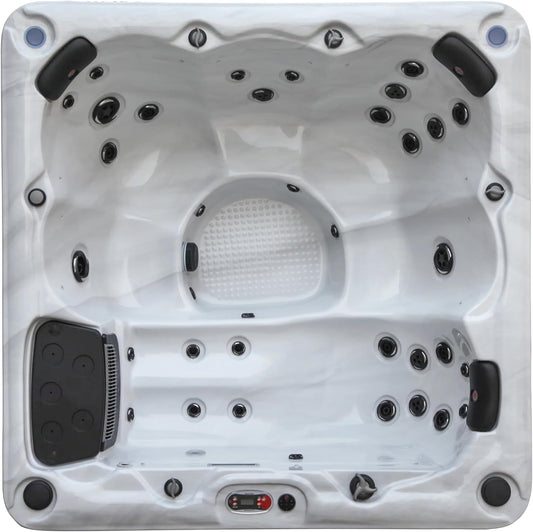
 Reduced
Winnipeg Hot Tub | 5-6 Person 35-Jet | 198 x 198 cm
6-Person 35 Jets 5 HP 198 x 198 cmRegular price £4,999.00Regular price£7,999.00Sale price £4,999.00Reduced -

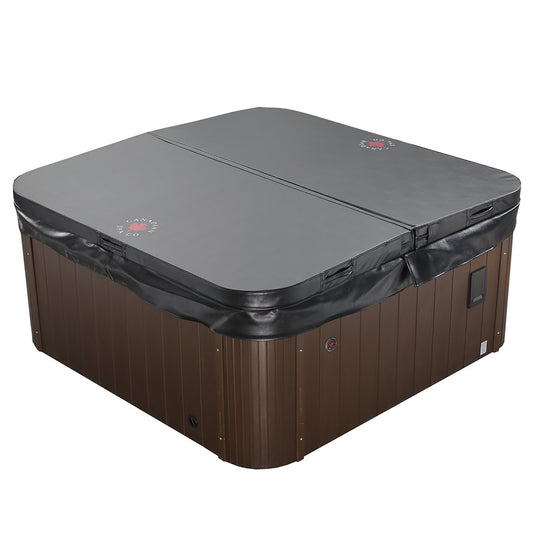
Ex-Display/Demo London SE 6-Person Hot Tub - 2yr Warranty
6-Person 44 Jets 10 HP 213 x 213 x 87 cmReducedEX-DISPLAYEx-Display/Demo London SE 6-Person Hot Tub - 2yr Warranty
6-Person 44 Jets 10 HP 213 x 213 x 87 cmRegular price £5,099.00Regular price£9,995.00Sale price £5,099.00ReducedEX-DISPLAY -


Cornwall Plug & Play Hot Tub | 5-Person 18-Jet 1980x1980x730mm
5-Person 18 Jets 2 HP 198 x 198 x 73 cmReducedCornwall Plug & Play Hot Tub | 5-Person 18-Jet 1980x1980x730mm
5-Person 18 Jets 2 HP 198 x 198 x 73 cmRegular price £4,999.00Regular price£5,999.00Sale price £4,999.00Reduced -


London SE 6 Person Hot Tub | Canadian Spa Company UK
6-Person 44 Jets 10 HP 213 x 213 x 87 cmReducedLondon SE 6 Person Hot Tub | Canadian Spa Company UK
6-Person 44 Jets 10 HP 213 x 213 x 87 cmRegular price £6,999.00Regular price£9,995.00Sale price £6,999.00Reduced -
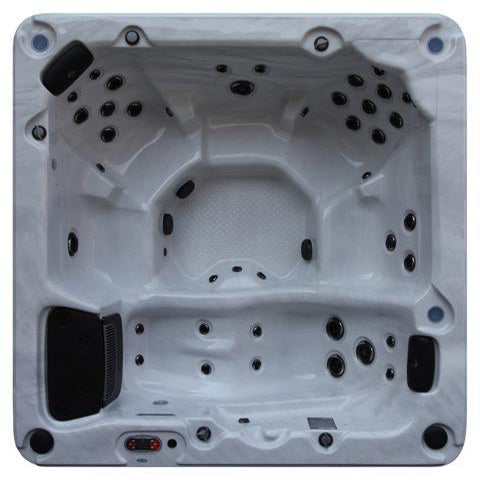
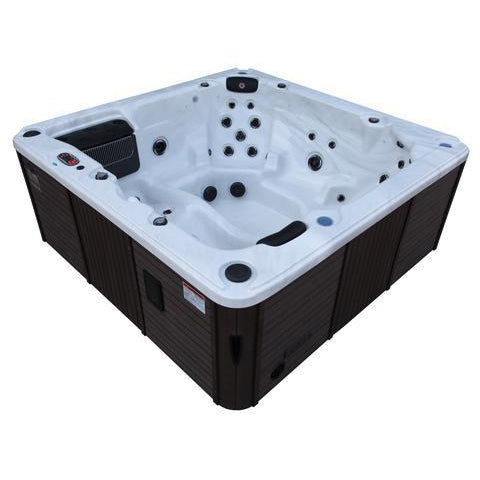 Reduced
Thunder Bay Hot Tub | 5-6 Person 44-Jet | 219 x 219 cm
6-Person 44 Jets 10 HP 219 x 219 x 82 cmRegular price £6,999.00Regular price£8,999.00Sale price £6,999.00Reduced -
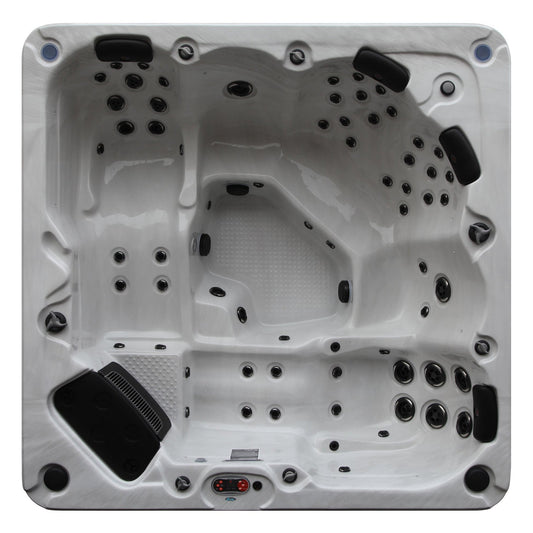
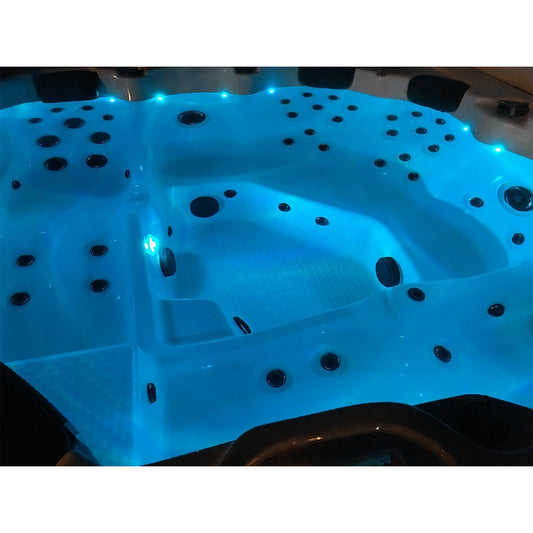 Reduced
Vancouver Hot Tub |6-Person 65-Jet | 227 x 227 cm
6-Person 65 Jets 10 HP 227 x 227 cmRegular price £6,899.99Regular price£10,900.00Sale price £6,899.99Reduced -

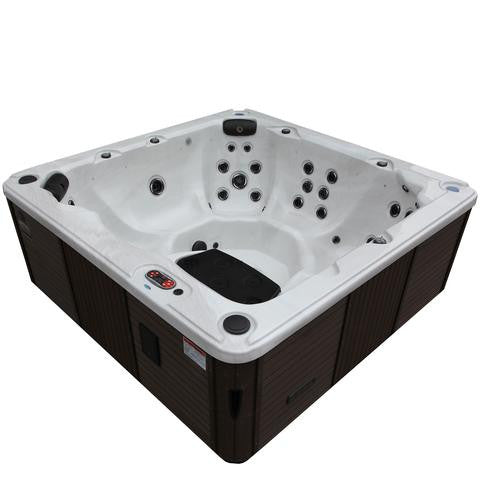 Reduced
Victoria Hot Tub | 6-7 Person 44-Jet | 219 x 219 cm
7-Person 44 Jets 10 HP 219 x 219 cmRegular price £5,495.00Regular price£10,900.00Sale price £5,495.00Reduced -
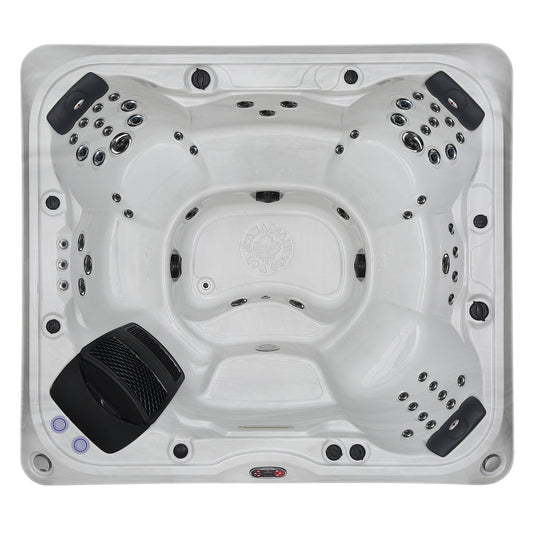
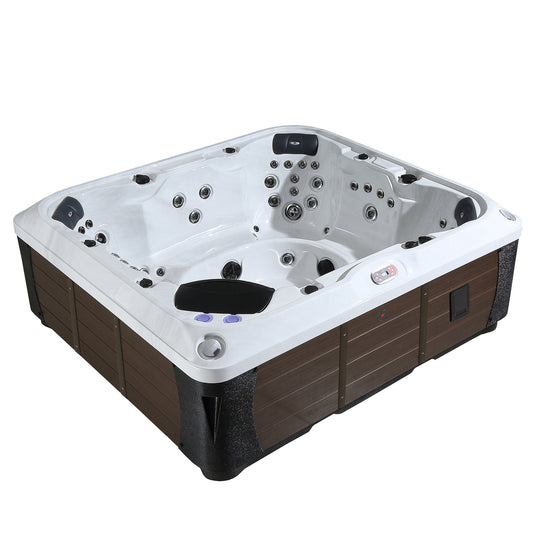
Kingston AI Hot Tub | 6-Person 55-Jet | 240 x 216 cm
6-Person 55 Jets 10 HP 240 x 216 cmReducedKingston AI Hot Tub | 6-Person 55-Jet | 240 x 216 cm
6-Person 55 Jets 10 HP 240 x 216 cmRegular price £8,995.00Regular price£11,995.00Sale price £8,995.00Reduced -
 Reduced
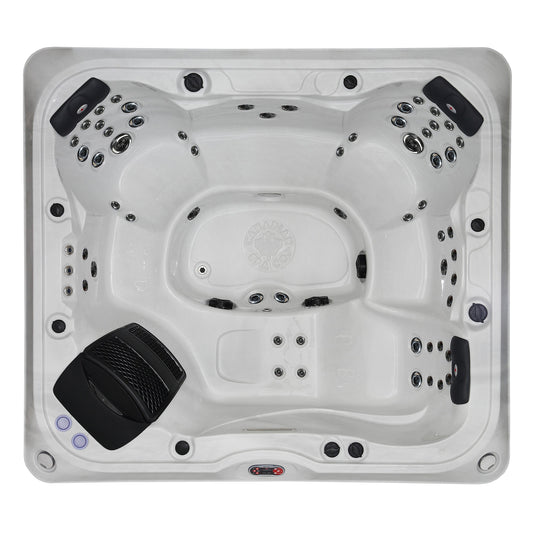
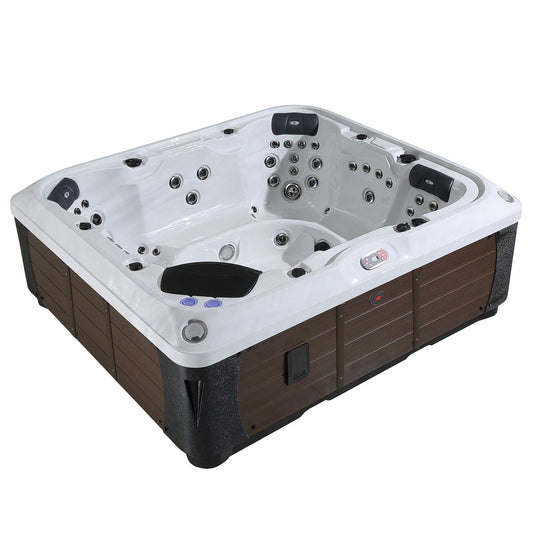
Alberta AI Hot Tub | 6-Person 57-Jet | 240 x 216 cm
6-Person 57 Jets 10 HP 240 x 216 x 93 cmRegular price £8,995.00Regular price£11,995.00Sale price £8,995.00Reduced -

 Reduced
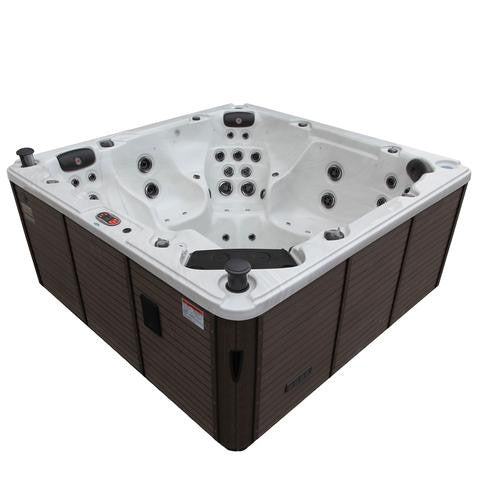
Niagara Hot Tub | 7-Person 60-Jet | 228 x 228 cm
7-Person 60 Jets 10 HP 228 x 228 x 99 cmRegular price £10,999.00Regular price£11,995.00Sale price £10,999.00Reduced -
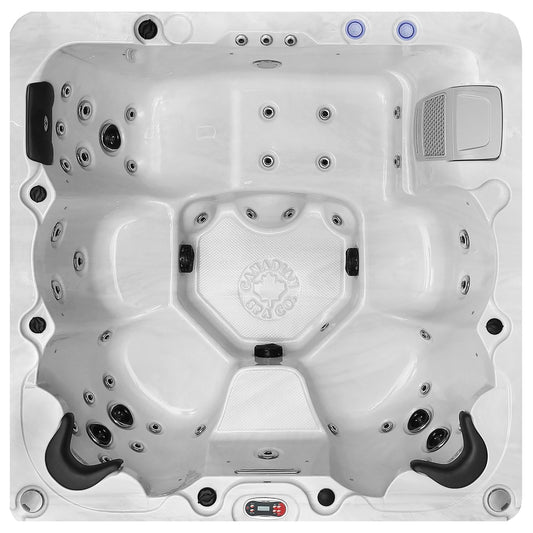
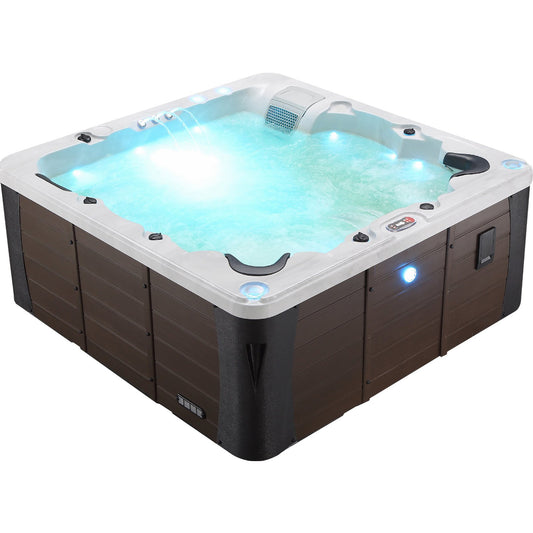
Erie Hot Tub | 6-Person 46-Jet Luxury Hot Tub | 213 x 213 cm LED Lighting, Built-in Bluetooth, Aromatherapy Canister, and Glacier Filtration
6-Person 46 Jets 10 HP 213 x 213 x 89 cmReducedErie Hot Tub | 6-Person 46-Jet Luxury Hot Tub | 213 x 213 cm LED Lighting, Built-in Bluetooth, Aromatherapy Canister, and Glacier Filtration
6-Person 46 Jets 10 HP 213 x 213 x 89 cmRegular price £6,999.00Regular price£11,999.00Sale price £6,999.00Reduced -
 Reduced
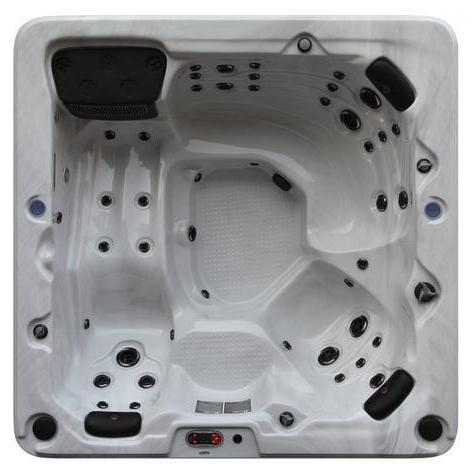
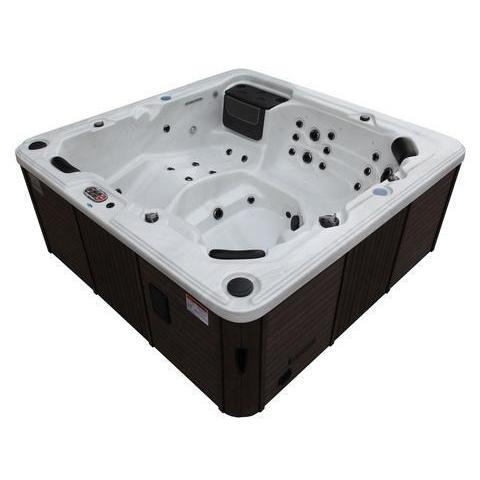
Toronto UV 44-Jet 5-6 Person Hot tub | 213 x 213 cm
6-Person 44 Jets 10 HP 213 x 213 x 82 cmRegular price £6,999.00Regular price£9,995.00Sale price £6,999.00Reduced


5, 6 and 7-person hot tubs: UK Buying Guide
This collection is part of the Canadian Spa Company UK range of hot tubs, swim spas, saunas and spa essentials. Compare options by fit for your space, running costs, insulation, warranty and ongoing maintenance requirements to make a better long-term choice.
If you need help choosing the right model or part, our support team can guide you on compatibility, delivery and aftercare.
About 5, 6 and 7-person hot tubs
Choose a larger hot tub by how many seats will actually be used, the seating layout, footprint, access and electrical supply. This collection brings together five-, six- and seven-person models for domestic gardens, including loungers, upright seats and different jet layouts.
Compare each model's dimensions, filled weight, power requirement and delivery access. Most acrylic models in this group need a dedicated 32A supply installed by a qualified electrician and a level, load-bearing base. Product pages show model-specific specifications; check them before ordering or book a showroom visit.
Compare popular six-person models
- London SE: six seats, 44 jets, a full-length lounger, 213 × 213 cm footprint and dedicated 32A supply.
- Erie SE: six seats, 46 jets, a no-float lounger, 213 × 213 cm footprint and dedicated 32A supply.
Use the product pages for current stock, dimensions, electrical requirements and delivery options.
Who it's for
Where a 5+ seat spa is the right answer
Bigger isn't automatically better — but for these use cases it's the honest choice. Here's where the 5–7 seat category earns its footprint.
-
Households that genuinely host
If Friday nights reliably bring four-plus adults into the garden — neighbours round, family visiting, friends who've made the spa a standing appointment — a 6-seat earns its footprint. The water's already hot, the variety of seats means everyone finds the right spot, and nobody's sitting on someone's knee. This is the use case the tub is built for: not the wedding-anniversary party, but the ordinary Friday that happens fifty times a year.
-
Families with teenagers — and their friends
A 4-seat fits a young family with under-11s. Once the kids hit 13–14 and start bringing friends home, a 4-seat gets cramped fast — teenage inseams, teenage groups of three or four, and the spa becoming a social space rather than family time. A 6-seat absorbs that growth without needing to be replaced. If you're buying a spa for a household where the kids will go through their teen years in the house, sizing up is the longer-horizon buy.
-
Multi-generational households
Grandparents in the lounger, adults on the bench seats, grandchildren on the corner step. Multi-generational households use the tub in a particular way — everyone at their own depth and jet intensity — and a 5+ seat tub accommodates that without needing anyone to move seats. The cool-down seat at a lower depth is specifically useful here: older users and younger children often want out of the hot zone sooner, and a proper cool-down seat lets them stay in the tub while they acclimatise.
-
Serious massage-seat users
If the tub is primarily for long massage sessions — winding down after training, easing tired backs and shoulders after heavy weeks — a 6-seat gives you the ability to cycle between different seat types in a single session. Ten minutes on the lounger for the full-body heat soak — the deepest seat cooks you out fastest — then a longer spell upright in the captain's chair for the lumbar jets, and a few minutes on the cool-down to finish. That's a different use pattern from 'get in, sit down, chat, get out', and it's the one most users describing the spa as 'essential rather than nice-to-have' are running.
-
Hosting, done properly
When friends stay over or the extended family descends, a 6-seat with a proper jet bank and bench seating around the perimeter means nobody is perched on an edge waiting their turn. Groups settle in for the evening rather than rotating in shifts — and the spare seats earn their keep every time you host.
-
Owners who want variety in their own sessions
Even for a two-adult household, some buyers want the option of a lounger on Tuesday, a captain's chair on Thursday, a cool-down bench on Saturday — the equivalent of owning a bigger kitchen because you like having the space even when you're cooking for two. That's a legitimate reason to buy bigger. We'd point out that it's a want rather than a need, and suggest the 4-or-less range if running cost is tight — but if budget is comfortable and the variety matters to you, buy the spa you'll enjoy owning.
Common questions
5–7 seat hot tub FAQ
Do I actually need a 5+ seat hot tub?
Honest test: how many people will use the tub together, on a typical week, once the novelty has settled? If the answer is one, two or three, you don't need 5+ seats — the 4-or-less range is the right category and you'll save meaningfully on running cost. If the answer is genuinely four or more — Friday nights that fill up reliably, teenagers bringing friends, multi-generational households — a 5+ seat tub is the honest buy.
The most common regret we hear is from buyers who sized up 'for the occasions' and ended up running a 1,800-litre tub for two-adult use fifty weeks a year. The less common (but real) regret is from buyers who sized down on a tight budget and then found the household outgrew the tub a year in. Size for the routine pattern, with an honest look at the next 5 years — teenagers, retirement, how often you host — rather than for peak occasions or worst-case austerity.
How much more does a 6-seat cost to run vs a 4-seat?
Less than most buyers expect. Once up to temperature, a well-insulated 6-seat runs at roughly the same per-day cost as a 4-seat — the difference is measured in pennies per day, not pounds, with the 6-seat toward the upper end. For the year-round assumptions behind that, see the hot tub prices guide. The reason: steady-state heat loss is driven by cover surface area and cabinet insulation, both of which are similar across our acrylic range, not by water volume.
Where the 6-seat is meaningfully more expensive is in first heat-up (nearly twice the water to bring up from mains temperature) and in water changes — full drain and refill every 4–6 months means 1,800 litres through the heater instead of 1,100. Those aren't daily running-cost line items; they're embedded in the water-change cycle. Over a year, expect the 6-seat to cost modestly more to run than a 4-seat — tens of pounds, not hundreds.
Can a 5+ seat tub run on 13A plug-and-play?
Mostly no. A 5/6/7-seat tub needs bigger circulation pumps to drive the additional jet arrays at full pressure, and those pumps need the 32A headroom that a standard outdoor socket can't provide. A handful of 5-seat models with modest pump specs are 13A-compatible, but the higher pump specs (Toronto UV and similar) require 32A.
If 32A install is a constraint — a tight consumer unit, a rental property, a long run from the house — check the 4-or-less range first. If you genuinely need 5+ seats, budget for an electrician attendance of a few hundred pounds on top of the spa. The install is a half-day job for a qualified sparky and happens on a separate visit from the spa delivery. Worth booking the electrician early so the circuit is live by the time you want the first fill.
What's the difference between a lounger and a captain's chair?
A lounger is a full-length contoured seat — you lie back almost horizontal, with jets running along your spine, calves, feet and sometimes lumbar. It's the seat most people default to for a long passive soak and the one that works hardest on the lower back. Fit depends on user height; loungers are typically sized for users up to around 180–185cm tall. Taller users sometimes find their feet hit the wall.
A captain's chair is a deep bucket seat, usually at a corner of the tub, with the highest jet-per-seat count in the spa — typically 10–14 jets targeting lumbar, shoulders, neck and calves from a seated position. It's the seat for serious jet massage: you sit upright, water up to shoulder height, and the jets are pressurised enough that you can feel the massage working on specific muscle groups. Most 6-seat tubs have one captain's chair; some have two. Long-term owners typically have a 'favourite seat', and it's usually the captain's chair.
How much space do I need for a 5+ seat tub?
Plan a minimum 3.5 × 3.5m level base for a 5/6-seat, closer to 4 × 4m for a 7-seat or any model with a cover-lifter arc. Tub footprints run 220–245cm square; the additional space is for realistic access on all four sides, a cover-lifter swing radius, and a step if you want one. Concrete or close-jointed paving slabs rated for 2.5–3 tonnes filled weight. Direct onto grass isn't a base; garden decking only works if the structure is purpose-built or explicitly engineered for spa load.
The access space matters more than people expect. Filter changes, annual service, the occasional need to get to the pump housing — all of those are dramatically easier when there's 50cm of clear walk-around. A tub wedged against a wall looks neat on day one and becomes a problem on day 400 when a jet needs replacing.
How much water does a 6-seat hot tub hold?
Typically 1,400–1,900 litres for a 5/6-seat; the bigger 7-seat models run 1,800–2,100. Mains filling takes 45–90 minutes depending on household water pressure. Drain-down for a full water change (every 4–6 months) takes a similar time. From a cold mains fill (10–14°C) up to 38°C takes roughly 24–28 hours — the 3kW heater on 32A tubs and the 2kW heater on the smaller plug-and-play models roughly match their respective water volumes, so first heat-up is broadly similar either way. Once up to temperature, the heater cycles to hold the set point — no more than a few hours of actual heater-on time per day in average conditions.
Can I lift a 6-seat cover without a cover-lifter?
Practically, no — not night after night. Our 5″ tapered hard-top covers on the acrylic 5/6-seats weigh roughly 30–40kg, 40kg+ on a 7-seat. That's a genuinely heavy awkward object to wrestle off the tub every evening, especially in wind, rain or on a cold night when the cover's picked up surface water. A cover lifter isn't optional on a 5+ seat tub; it's part of the install.
A cover lifter adds to the up-front cost but makes the difference between a tub you use every evening and a tub you don't use because dealing with the cover is annoying. This is the one accessory we'd say is not negotiable at this size — budget for it in the original quote rather than adding it six months in.
Are there delivery or access issues with a bigger tub?
Potentially, yes — the 220–245cm tub width is the usual constraint. Standard garden-gate access (800–900mm) won't fit a 6-seat; you'll need a 1,000mm+ clear passage from the kerbside drop to the final position, or an over-the-fence crane lift, or the ability to remove a fence panel temporarily. Before ordering, measure the narrowest point of the access route — including any turns — and compare to the spa's exact width on the product listing.
If access is tight, we can arrange a site survey. A crane lift is the usual solution and typically runs £400–£800 depending on reach and overhead complexity. We'd rather quote that honestly up front than have a spa arrive kerbside with no way to get it to the patio.
Is the insulation the same as the smaller tubs?
Yes. Same heat-recycling insulation package on our acrylic hot tubs — high-density foam bonded to the shell, IR-reflective panelling, the same 5″ tapered hard-top cover — and the same Balboa BP control system. The build spec doesn't scale with size — only the seat count, pump HP and water volume do. Real-world insulation check: with all pumps at full power across a 45-minute soak, our tubs lose roughly 1–2°C regardless of size. A lesser-insulated competitor tub at any size drops closer to 5°C in the same session, pushing users out of the water before they're ready to leave.
Can 6 people actually all get full jet pressure at once?
Honestly, no — not full jet pressure on six different jet banks simultaneously. No 6-seat tub is plumbed that way; the pump spec you'd need is swim-spa class — a heavier 50A circuit and a different class of installation from a 32A hot tub. What a proper 6-seat does is run both pump sides at full power — every jet face individually adjustable — so the high-pressure seats get full push while others dial it gentler. In practice, six people in the tub cycle through the high-pressure seats naturally — someone moves to the cool-down, someone else takes the captain's chair, the lounger is freed up.
If the primary use case is six adults all getting simultaneous maximum-pressure jets, that's swim-spa territory, not a domestic 6-seat. For the real-world case — six people sharing the tub, cycling seats over a 45-minute session — the domestic 6-seat is exactly the right product.
What if we buy a 6-seat and later realise we'd rather have a 4-seat?
It happens — usually 3–5 years in, once the kids have left home or the entertaining pattern has settled. A used 6-seat in good condition has a healthy resale market (hot tubs depreciate more slowly than people expect), so 'trading down' is realistic. We'd rather have this conversation before you buy, though — buying the right-sized spa from the start is cheaper than cycling through two tubs in a decade. If you're uncertain about household-size trajectory, the honest conversation to have with us is about the next five years, not the next twenty.
What warranty do 5+ seat hot tubs carry?
Same manufacturer warranties as our smaller hard-shells — shell structure, cabinet, plumbing and equipment cover, with wear items (filters, jets, pillows, cover fabric) treated as consumables. Warranty length and inclusions vary by model; full per-product terms on each listing. UK support is handled from our Redhill, Surrey office — same team, same phone number. On the bigger tubs we'd specifically flag that keeping up with filter changes and water chemistry matters more than on a smaller tub — more water through more jets means more filter load, and ignoring it is the fastest way to invalidate a pump warranty.
UK buying guide
5+ seat hot tubs UK — buying guide
A 5, 6 or 7-seat hot tub is the right buy for a specific kind of household. It's also the wrong buy for a larger number of households who think they need one. This guide walks the decision honestly — what the bigger tub actually gives you, what it doesn't, and how to tell which category you're in.
What bigger actually buys you
Three things, and only three:
- Seat variety. A 6-seat spa typically includes a full-length lounger, a captain's chair with the highest jet-per-seat count, two or three bench seats, and a cool-down seat at lower depth. That variety genuinely matters for long soaking sessions where cycling between different jet patterns and water depths is part of the appeal. It's also what makes the tub more interesting for multi-generational households — everyone finds their own seat.
- Pump HP. Bigger tubs carry bigger circulation pumps — the Toronto UV runs 2×5HP massage pumps, which is serious directional pressure. That's not something you get on a 3-seat tub, and if aggressive shoulder-and-lumbar massage is the reason you're buying a spa, the pump spec matters.
- Group use. Four-plus adults in the water at once without anyone sitting on anyone's knee is a 5+ seat capability. If your routine use reliably fills those seats, the tub earns its footprint.
What bigger does not buy you
Surprisingly, quite a lot:
- Better insulation. Same 5″ tapered hard-top cover, same high-density shell foam, same IR-reflective panels as our smallest acrylic two-seater. Build spec doesn't scale with seat count.
- Lower running cost per seat. There's no 'economy of scale' advantage — a 6-seat at steady-state costs about the same per day as a 4-seat, because heat loss is driven by cover and insulation spec, not water volume. The 6-seat's advantage is absorbing more bodies without proportional cost increase, not being cheaper per body.
- Simultaneous full-pressure jets for everyone. No 6-seat tub delivers maximum-pressure directional jets on all six seats simultaneously — the pump spec required is swim-spa class — a heavier 50A circuit, a different class of installation from a 32A hot tub. A 6-seat runs its strongest seats at full pressure while people rotate — which is genuinely how people use the tub in practice, but worth knowing about before you buy.
- Automatic better-value-for-money. A 6-seat you bought because 'we might entertain' and then never fill isn't a better-value-for-money purchase than a 3-seat you use every evening. The economics only work when the capacity is used.
Honest sizing — how many seats do you actually need?
Walk through the test we use with buyers on the phone:
- How many adults will use the tub together, in a typical week, once the first-six-months novelty is past? Not 'how many could fit', but 'how many will routinely'.
- What's the household trajectory over the next 5 years? Kids growing into teens and bringing friends home is a real seat-count driver. So is retirement and more at-home time.
- Is there a specific use case that demands seat variety? Long-session soakers cycling between loungers, captain's chairs and cool-down seats. Multi-generational gatherings. Long sessions broken up by seat changes. If the answer is yes, 5+ seat makes sense even for a smaller household.
- What's the running-cost tolerance? A 6-seat costs modestly more to run than a 4-seat — tens of pounds a year, not hundreds. It's not a showstopper — but for a tight energy budget, the 4-seat is still the cleaner answer if you can fit the routine use into it.
The most common genuine 5+ seat buyer is a family with pre-teen to early-teen kids who entertain regularly, a multi-generational household, or a household that hosts regularly. The most common mistaken 5+ seat buyer is a two-adult household sizing for occasional events and regretting the footprint within 18 months.
32A install — what to plan for
Most 5+ seat tubs run on a dedicated 32A spa circuit rather than a 13A plug. The reason is pump HP — bigger circulation pumps need the 32A headroom — not heater draw. The install is a half-day job for a qualified electrician; cost depends on cable-run length and consumer-unit status. Some older UK properties need a consumer-unit upgrade to accept a new 32A circuit; that's a separate several-hundred-pound item.
Book the electrician early so the circuit is live by the time you want the first fill. The install happens on a separate visit from the kerbside drop, and a spa that can't be commissioned because the circuit isn't ready is the most common avoidable frustration at this size. If the 32A install is a real constraint for your property — tight consumer unit, long cable run, listed-building rules — look at the 13A plug-and-play range first.
Cover handling, access, base spec — the things that bite later
Three practical points that are easier to handle before you buy than after:
- The cover weighs 30–40kg+ and needs a cover lifter. Not optional on a 5+ seat tub — budget for it in the initial quote (see current cover lifters). The difference between a tub that gets used every evening and a tub that becomes a decorative feature is usually the cover management.
- Access matters more than it sounds. Measure the narrowest point between kerbside and final position — a 6-seat is 220–245cm wide and won't fit through a standard garden gate. Be realistic about fence panels, side passages and turn radii. If the access is tight, a crane lift is £400–£800 and is the usual solution.
- The base needs to be right. Filled weight 2.5–3 tonnes, evenly distributed. Concrete or close-jointed paving on compacted hardcore. If you're using existing garden decking, get it inspected before ordering; domestic decking frequently isn't rated for the point loads a 6-seat applies on its corners.
Where Canadian Spa fits
We've been a UK hot tub specialist for 40 years, with our warehouse and service office in Redhill, Surrey. The 5+ seat range sits alongside the 4-or-less, plug-and-play, inflatable and swim-spa ranges on the same UK supply chain and the same service team. If something goes wrong in year two of owning a 6-seat, you're phoning a UK office and speaking to the same team who'll be there in year ten. Our warranty, service visits and parts supply are all handled from the same address.
Frequently asked
What's the best 6-person hot tub UK?
The best 6-seat tub is the one that matches your household's actual use pattern. For serious jet massage with regular group use, the Toronto UV is a strong pick — 2×5HP pumps, lounger, captain's chair and a full set of bench seats. For a more modest spec with the same seat count, the London SE and Thunder Bay are both popular choices. Each product listing shows the exact jet count, pump HP, footprint and electrical requirement. If you're not sure which model is right, phone the Redhill office and walk through the routine use pattern with us — we'd rather point you at the right tub than sell you into the wrong one.
How much does a 6-person hot tub cost to run UK?
Less than most buyers expect, with a 6-seat sitting toward the upper end of the typical domestic range at current UK electricity tariffs. The exact figure depends on tariff, cover condition and use pattern — see the hot tub prices guide for the assumptions, which cover heating from cold on first fill, holding 38°C through the year, and running the circulation pump and jets for typical domestic use. The main levers are cover quality (ours is 5″ tapered), insulation spec (high-density foam bonded to the shell plus IR-reflective panels), placement (sheltered from prevailing wind), and use pattern (lift the cover only when getting in). Expect a 6-seat to cost modestly more to run than a 4-seat — a real difference, but tens of pounds a year rather than the hundreds some buyers expect.
Do I need an electrician for a 5+ seat hot tub?
Yes — most 5+ seat tubs require a dedicated 32A spa circuit rather than a 13A plug. The install is a half-day job for a qualified electrician; cost depends on cable-run length and whether the consumer unit needs upgrading. Book the electrician early so the circuit is live by the time you want the first fill. A handful of 5-seat models with modest pump specs are 13A-compatible; each product listing shows the electrical requirement clearly.
6-seat vs 4-seat hot tub — which should I buy?
Pick 6-seat if your routine use genuinely fills 5 or more seats (family with teens, regular group entertaining, multi-generational households, regular hosting), or if you want the seat variety — lounger, captain's chair, bench, cool-down — for long massage sessions. Pick 4-seat if routine use is 1–3 adults with occasional guests, if the garden is tight, if 32A install is a constraint, or if running cost tolerance is close. The seat count should match the routine use pattern, not the twice-a-year occasions — sizing up for rare events and under-using the tub the rest of the year is the most common regret we hear at this size.
What base do I need for a 5+ seat hot tub?
A level, load-bearing 3.5 × 3.5m minimum — ideally 4 × 4m for access space and a cover-lifter swing. Concrete or close-jointed paving slabs rated for 2.5–3 tonnes filled weight. Decking only works if the structure is explicitly spec'd for the load; most domestic garden decking isn't. Direct onto grass isn't a base — the tub sinks unevenly, the shell stresses on one corner, and the warranty is compromised. If in doubt about the existing base, a 30-minute conversation with a groundworker before ordering the spa is the best-spent money on the install.