


How to Clean a Hot Tub: The Complete Guide to Consistently Clean Spa Water
Xavier LabelleA hot tub is meant to be your at-home wellness fix — but only if the water actually stays clean and hygienic. Most owners focus on chlorine, pH and rinsing the filter. A really effective hot tub clean covers more ground than that.
To keep the water clear and stop build-up forming inside the system, you need to clean the water, the filter and the pipework on a regular basis. This guide walks through how to do that properly so the water quality stays good long term.
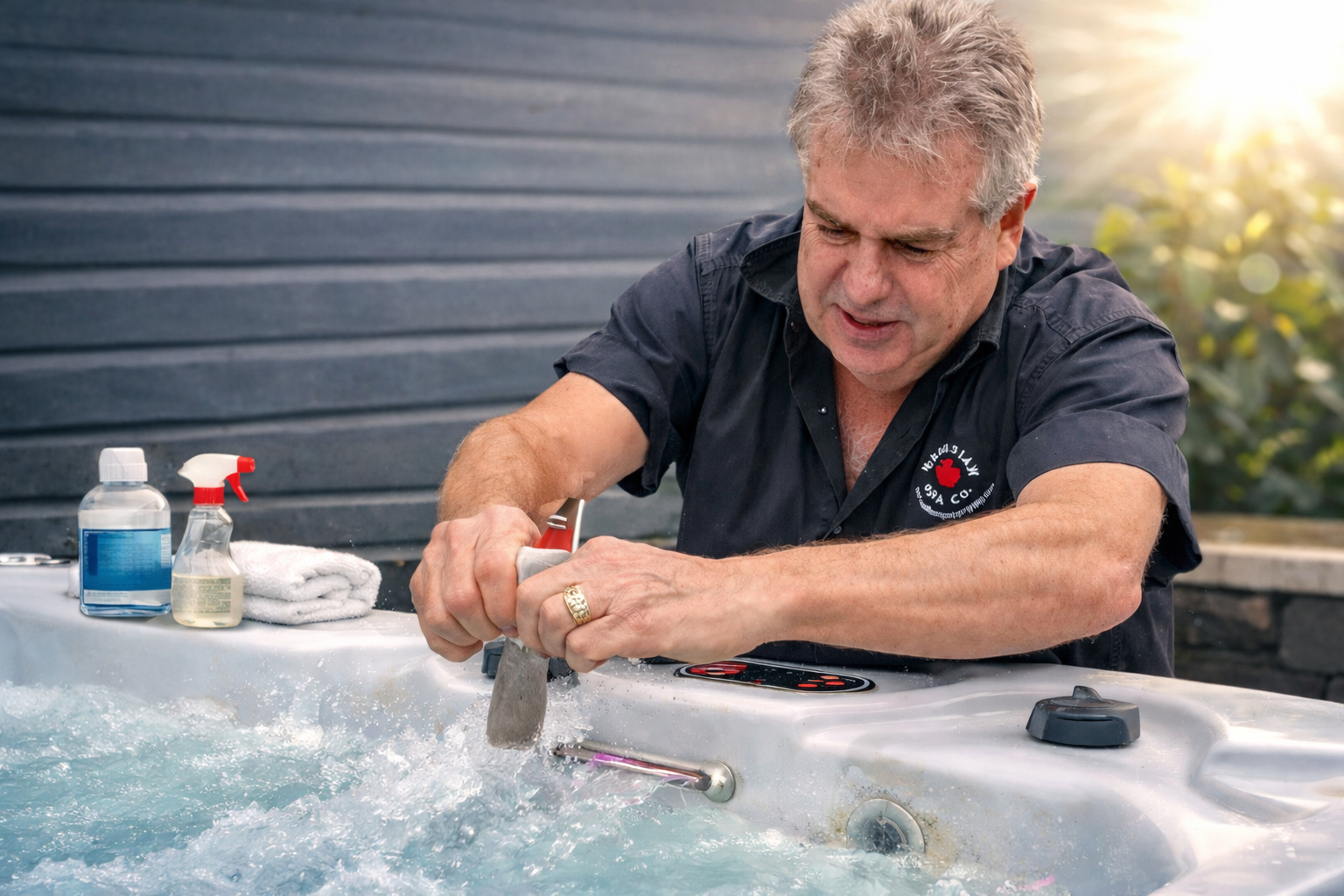
The three key areas of hot tub cleaning
1. The water
Spa water should be tested regularly, with the key readings kept in range:
- pH
- Chlorine level
- Total alkalinity
Unbalanced water can lead to cloudiness, skin irritation or scale build-up.
2. The filter
The filter pulls particles out of the water and needs cleaning on a steady schedule:
- Rinse the filter every 1–2 weeks
- Give it a thorough deep clean monthly
- Replace it roughly every 12 months depending on use
A clean filter keeps the spa running efficiently and the water clear.
3. The pipework
The most important — and most overlooked — part of cleaning a hot tub is the pipework inside the system. Over time, residues build up in there:
- Body oils
- Lotions and cosmetic residue
- Skin particles
- Soap residue
These deposits can form a slimy layer known as biofilm. Biofilm builds up where bacteria and other microorganisms settle in damp environments and stick to the inside of the pipework. It can lead to:
- Water that turns cloudy faster
- More foaming
- Off-smells
- Chemicals working less effectively
Why pipework cleaning matters
Even with regular water changes, residues can stay behind in the plumbing. When you refill the spa, that build-up can recontaminate the fresh water almost straight away. That's why most manufacturers recommend cleaning the pipework whenever you do a water change.
For this you need a dedicated hot tub pipework cleaner. Canadian Spa Spa Flush Plumbing and Jet Cleanse is one example — designed to lift oils, lotions, cosmetic residue and biofilm out of the system.
The cleaner is added to the existing spa water and circulates through the entire pipework, lifting deposits out of the jets, lines and shell.
Step by step: cleaning your hot tub properly
A thorough clean should happen on a regular basis, especially at every water change.
- Remove the filter. Take the filter cartridge out before you start.
- Clean the pipework. Add a pipework cleaner like Spa Flush to the existing water. It circulates through the lines and shifts deposits and biofilm.
- Run the jets. Switch on all pumps and jets and open the air valves fully so the cleaner is pushed right through the pipework.
- Let it circulate. Run the jets for 15 to 30 minutes. You may see foam or dark residue appear in the water — that's normal and means it's working.
- Drain the spa. Empty the water completely afterwards.
- Wipe down the shell. Give the inside surface a quick wipe to lift any remaining residue.
- Refill. Fill the tub with fresh water and rebalance the water chemistry.
How often should you clean a hot tub?
For consistently good water quality, the following routine works well:
| Task | Frequency |
|---|---|
| Test the water | 2–3 times a week |
| Rinse the filter | Every 1–2 weeks |
| Deep clean the filter | Monthly |
| Change the water | Every 3–4 months |
| Clean the pipework | At every water change |
Many specialists also suggest flushing the pipework with a dedicated cleaner roughly every 4–6 months to keep biofilm under control.
Wrapping up
A clean hot tub is more than clear water. For solid hygiene, the water, filter and pipework all need to be looked after on a regular basis. The pipework in particular is often underestimated. Products like Canadian Spa Spa Flush help shift biofilm, oils and other build-up out of the lines and improve water quality long term.
Available on our UK website:
With a proper routine, your hot tub stays hygienic, the water stays clear, and ongoing care becomes a lot less painful.