Hot tubs · 2 to 4 seats
Two to four. The size most UK households actually use.
Six-seat hot tubs photograph well. For the vast majority of UK households, they're the wrong buy. Our own install data and service calls tell the same story year after year: most spas are used one or two people at a time, with an occasional evening of four. 4+ adults in the tub at once happens a handful of times a year — which is exactly the wrong thing to size the purchase around.
This collection is the hot tubs rated for 4 adults or fewer: 2-seat couples' spas, 3-seat small-family tubs, and 4-seat household tubs. Smaller footprint, lower running cost, faster first heat-up — and the same insulation package, the same jet density per seat and the same Balboa BP control system as our bigger models. A 4-or-less spa is not a junior hot tub. It's the right-sized hot tub for the household that actually lives in the house.
Why 4-or-less is the right hot tub for most UK households
The UK hot tub market spent a decade pushing bigger-is-better. Running-cost reality and garden size have pushed it back. Here's why the smaller tub is often the better buy.
-
Fits into the garden you actually have
A typical UK back garden patio is 3–4 metres wide. A 6-seat hot tub is 230cm+ square — add access space, a cover-lifter arc and a step, and it eats the patio whole. The 2–4 seat tubs in this collection run roughly 170–215cm square, which slots onto an existing patio corner without a patio rebuild and leaves room for the table, the BBQ and the grass kids actually play on. If your garden is balcony-sized, courtyard-sized or otherwise tight, the smaller tubs are the only ones that work in real life.
-
Same jets per seat as the big tubs
A 3-seat spa with 21 jets gives seven jets per seat — the same per-seat density as a 6-seat spa with 42 jets. Smaller tub doesn't mean fewer jets per back and shoulders, it means fewer total jets because there are fewer seats. You get the same directional neck, shoulder, lumbar and calf coverage we build into any of our hard-shells. You're not buying a stripped-down spa; you're buying a spa that isn't carrying seats you wouldn't use.
-
Less water, lower running cost
A 2–3 seat spa holds roughly 800–1,100 litres; a 6-seat holds 1,400–1,900. Smaller water volume means faster first heat-up and less thermal mass to keep warm through the winter — and less cover surface area losing heat every night. Our smaller tubs sit toward the lower end of our typical £2–£2.50/day year-round running-cost figure, not outside it. Over a five-year ownership window, that's a real number — and it's the reason small tubs are disproportionately popular with households running a careful energy budget.
-
Honest about capacity — 4 for a soak, 3 for real hydrotherapy
A 4-seat hot tub genuinely seats four adults for a soak. If what you want is all four people pressed against a jet bank and getting serious massage coverage — legs, lumbar, shoulders, neck — three is the realistic number; four works if two of them are children. That's not a criticism, it's the geometry of jet placement in a 200–215cm tub. The honest way to size a hot tub is around how many people will use it routinely, not how many could theoretically fit in it at a Boxing Day party.
4 or Less Person Hot Tubs Buying Advice
Use this collection to compare specifications, delivery options, and aftercare before you buy. Contact our UK support team for help choosing the right model for your space and budget.
-
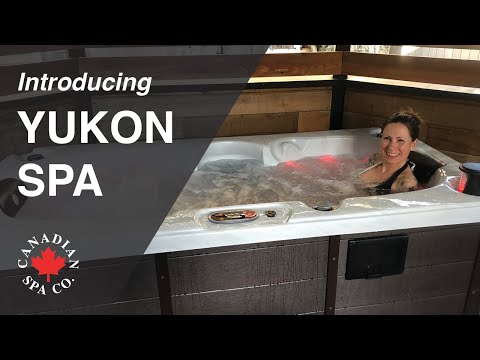
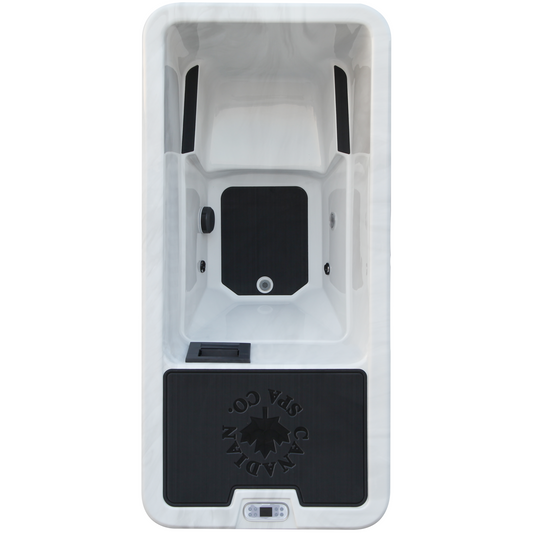
Yukon Plug & Play Hot Tub | 2-Person 16-Jet | 213 x 100 cm
Regular price £3,999.00Regular price£5,495.00Sale price £3,999.00Reduced -
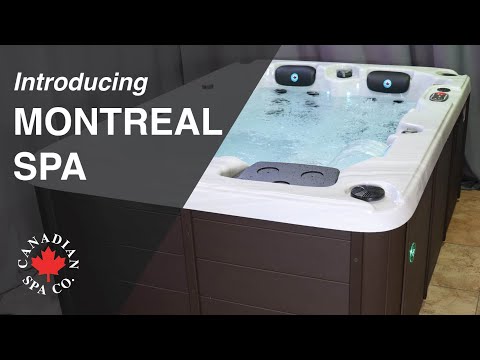
Montreal Plug & Play Hot Tub | 3-Person 24-Jet | 213 x 150 cm
Regular price £6,799.00Regular price£0.00Sale price £6,799.00 -
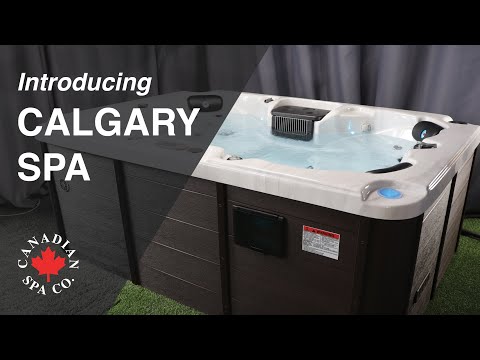
Calgary Plug & Play Hot Tub | 4-Person 24-Jet 213 x 150 x 78 cm
Regular price £5,609.99Regular price£7,300.00Sale price £5,609.99Reduced -
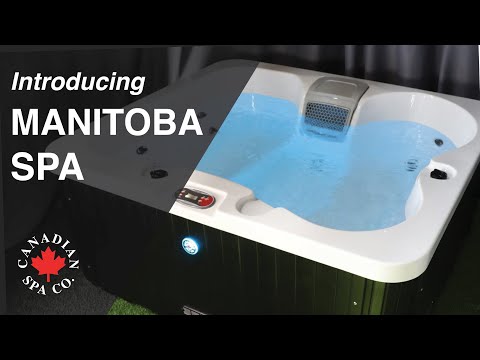
Manitoba Patio Spa | 4-Person 14-Jet | 172 x 154 cm
Regular price £4,999.00Regular price£6,999.00Sale price £4,999.00Reduced -
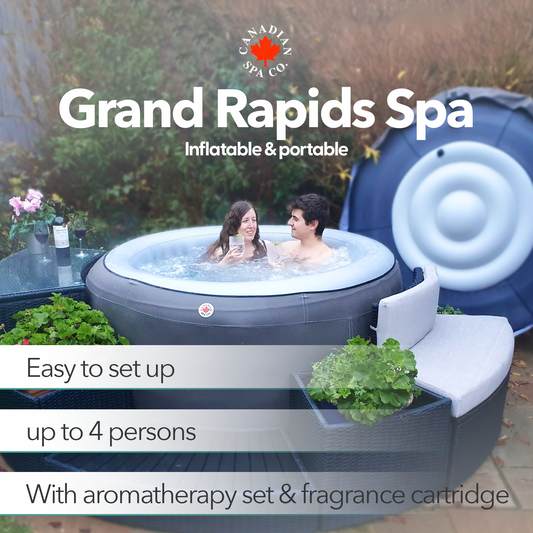
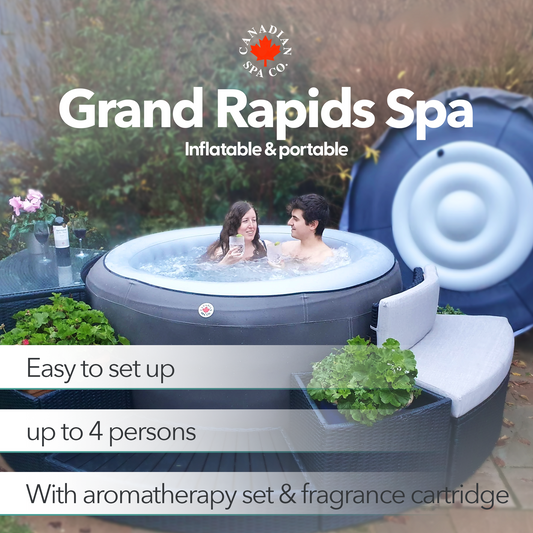
Grand Rapids Hot Tub – 2025 Stock | Limited Availability
Regular price £349.00Regular price£499.00Sale price £349.00Reduced -
Ex-Display/Demo Manitoba 4-Person Patio Spa | 172 x 154 cm
Regular price £3,995.00Regular price£4,995.00Sale price £3,995.00Reduced -
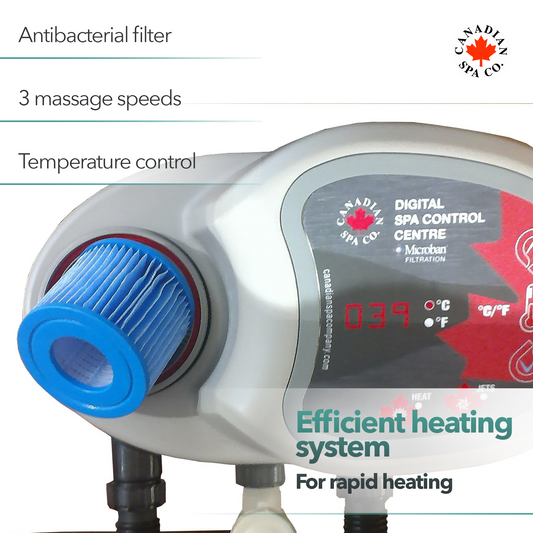
2026 Grand Rapids Inflatable - 110-Jet - 3 Speed - 4-Person Hot Tub with LED Light
Regular price £499.00Regular price -
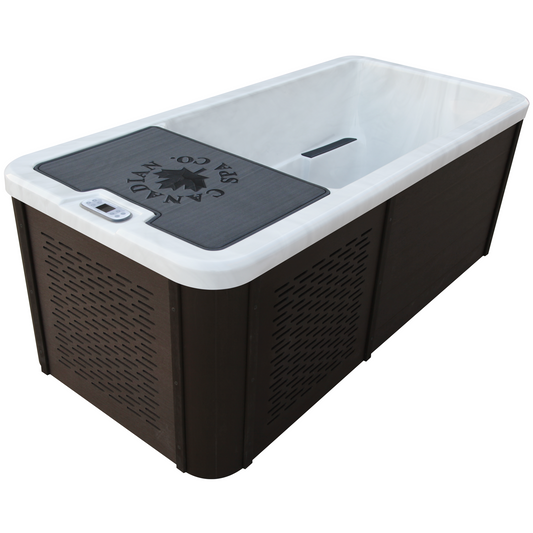
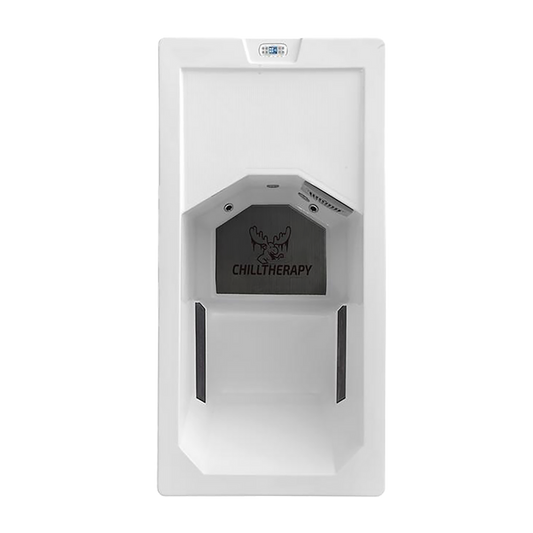
Chill Therapy Spa - Fill, plug in, and experience it Brown Finish
Regular price £2,895.00Regular price -
Great Lakes Chill Therapy Spa - Fill, plug in, and experience it Grey Finish
Regular price £2,495.00Regular price£5,999.00Sale price £2,495.00Reduced -
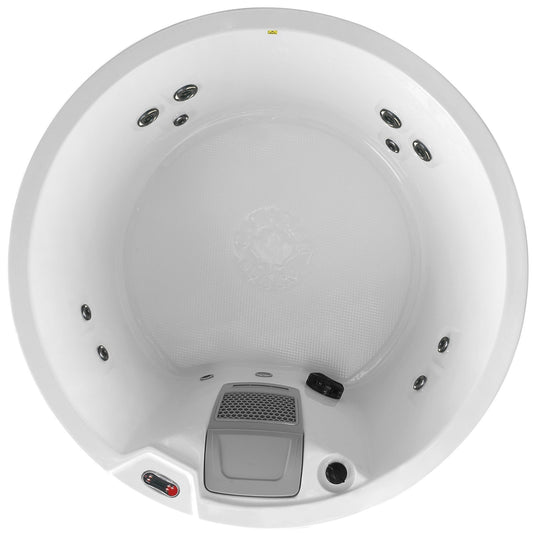
Okanagan 4-Person Patio Spa | 160 cm Diameter
Regular price £2,932.99Regular price£4,999.00Sale price £2,932.99Reduced







4 or Less Person Hot Tubs: UK Buying Guide
This collection is part of the Canadian Spa Company UK range of hot tubs, swim spas, saunas and spa essentials. Compare options by fit for your space, running costs, insulation, warranty and ongoing maintenance requirements to make a better long-term choice.
If you need help choosing the right model or part, our support team can guide you on compatibility, delivery and aftercare.
Who it's for
Where a 4-or-less spa is the right answer
A 2–4 seat hot tub isn't a compromise — it's a better match for how most UK households actually use a spa. Here's where it's the right call.
-
Couples and two-adult households
The largest single use case we see. A 2-seat or 3-seat spa is built around the way a couple actually uses a hot tub — one person per jet bank, both with proper back-to-bench contact, a decent hydrotherapy session in 30 minutes. A 6-seat tub works for couples too, but you're heating 1,000 extra litres of water for a seat pattern that stays empty 98% of the time.
-
Small families — 2 adults plus young kids
A 3-seat or 4-seat spa is genuinely right-sized for two adults and two primary-school-age children, which is the modal UK household spa buy. The kids sit on the corner bench, the adults take the contour seats, and the jets still work properly for everyone. Teenagers need a slightly bigger tub for practical legroom reasons; for under-11s, 4-seat is the sweet spot.
-
Smaller gardens, balconies, patios
A lot of UK gardens can't physically accommodate a 6-seat hot tub — not the tub itself, but the tub plus a step, a cover-lifter arc, access for maintenance, and room to walk around it. A 2–4 seat tub slots into a 2-metre patio corner without dominating the garden. If you're on a balcony or a roof terrace, check the structural load spec first — but the 2–3 seat tubs in this range are often the only ones that clear the weight limit once filled.
-
Holiday lets and second homes
A smaller tub is meaningfully cheaper to run at a property you aren't in full-time, and the cover is light enough for a single person to lift during changeovers — a real issue with the big 6-seat hard-tops. For Airbnb and self-catering owners, a 4-or-less tub hits the guest-experience box without putting a 6-seat spa's running cost on a property that's empty two days a week.
-
First-time hot tub buyers
If you're not sure yet whether a hot tub habit will stick in your household, a smaller tub is the right place to find out. Lower sticker price, lower running cost, smaller commitment of garden space — and if the routine does stick, almost every household discovers they use the tub in ones and twos anyway. Buying bigger on the assumption that 'we'll entertain' is how people end up with a £2,500/year running cost for a use pattern that fits a 3-seat tub.
-
Retirees and older households
Hot tubs have a meaningful place in managing joint stiffness, sleep quality and daily recovery for older users — which is a different use pattern from the 'Friday night party' one the marketing tends to default to. Smaller tub, lighter cover, shorter walk around the rim, lower energy bill. Two-seat and three-seat spas are disproportionately popular with buyers over 60, and for good reason — the therapy is the point, not the seat count.
Common questions
2–4 seat hot tub FAQ
How many people does a '4-seat' hot tub actually fit?
Four adults for a soak — shoulders and torso submerged, back against the bench, a glass of something on the rim. That use case is real. Four adults all getting full directional hydrotherapy simultaneously — jets hitting lumbar, shoulders and neck — is tighter; three adults is the realistic number for that, or four if two of them are children. It's a geometry problem rather than a marketing one: jet banks need physical separation to work, and a 200–215cm tub has four bench positions but only three 'primary' jet arrays.
The honest sizing rule: buy for the number of people who'll use it routinely, not the maximum it theoretically seats. If you're two adults who'll occasionally have a friend round, a 3-seat is fine. Two adults plus two young kids, 4-seat. Regularly 4+ adults several times a week, 5-seat and up.
Is a 2-person hot tub actually big enough?
For a couple, yes — often more so than a 4-seat. A proper 2-seat spa is built as two contoured seats, not 'half of a 4-seat'. That typically means deeper water, a lounger on at least one side for proper horizontal soaking, and jets designed for adult-length legs and backs. The water volume is around 700–900 litres, which heats up quickly and runs at the lowest end of our running-cost figure.
The trade-off is genuinely only the third-person option. If you regularly have a third adult join you — a family member visiting, a friend popping round for an evening soak — a 2-seat won't stretch. A 3-seat does. For two-adult households where 'the neighbours pop over for a soak' is rare, 2-seat is the right call and tends to be the spa people are happiest with after 12 months of ownership.
What are the typical dimensions of a 4-or-less hot tub?
Roughly:
- 2-seat: 170–190cm square (or 190 × 130cm if it's a slim design), around 75–85cm tall, water volume 700–900 litres.
- 3-seat: 190–200cm square, around 85cm tall, water volume 900–1,100 litres.
- 4-seat: 200–215cm square, around 85–90cm tall, water volume 1,100–1,500 litres.
Exact dimensions vary by model — each product listing carries the full spec. For siting, allow at least 50cm of clear access on one side for filter changes and service, plus room for a cover-lifter arc to pivot back without hitting a wall or fence.
How much does a 2–4 seat hot tub cost to run?
At current UK electricity tariffs, expect £2–£2.50 per day averaged across the year, with our smaller, well-insulated tubs sitting toward the lower end of that range. That's heating the water from cold on first fill, holding 38°C through the year, running the circulation pump 24/7 and operating the jets for a typical domestic soak pattern.
The £2–£2.50/day figure is the range we use across our whole hard-shell collection because once a properly insulated tub is up to temperature, the per-day cost is governed by heat loss through the cover and cabinet, not by water volume. A 2-seat spa's 900 litres and a 6-seat's 1,800 don't need proportionally different wattage to hold — they need similar wattage because they have similar cover surface area. Where the smaller tub wins clearly is first heat-up (half the water volume = half the time) and the embedded cost of the first fill every 4–6 weeks for a water change.
Can 4-or-less hot tubs run on a 13A plug?
Most of the 2-seat and 3-seat tubs in this collection are plug-and-play 13A — they run from a standard outdoor UK socket on an RCD-protected circuit, no electrician attendance on the day of delivery. Several 4-seat models are also 13A-compatible; some require 32A for the pump spec. Each product listing shows the electrical requirement clearly.
If you have an outdoor socket and no 32A feed, start with a 13A-compatible model — our plug-and-play collection breaks the category down properly. Most of our hard-shell 13A spas can be upgraded to 32A later without buying a new tub.
Can I get a lounger in a 4-or-less hot tub?
Yes — most 2-seat spas are built as a lounger + a contour seat, which is often the selling point. In 3-seat and 4-seat tubs it depends on the model; the trade-off is that a full-length lounger eats the space of roughly two bench seats, so a 4-seat with a lounger seats closer to three in practice. If a lounger is the reason you're buying a spa, mention it when ordering and we'll walk you through the specific models in the range that carry one at this size. The adult inseam you need to support matters — a 180cm-tall user needs a different lounger than a 165cm one.
Are the jets good enough on a smaller tub?
Yes — and in one important way, better. Jet count is a marketing number; what matters is jet placement per seat and pump HP behind each seat. A 2–4 seat spa has 2–4 separate jet arrays, each fed by the same circulation system we put behind the seats on a 6-seat tub. That means the massage on your back isn't softer because there are three seats instead of six — it's the same jet, the same pump pressure, the same directional coverage.
Where a bigger tub has an edge is if you want a different jet pattern to move between during a long session. Some 6-seat tubs have a lounger + two bench seats + a captain's chair, each with a different therapy focus. If that's the reason you're buying, go bigger. If you want one jet bank that works properly for you or you and your partner, a 2–4 seat does the job exactly as well.
What if my kids grow into teenagers — will we outgrow a 4-seat?
Plausibly, around age 13–14. A 4-seat spa with two 180cm+ teenage legs in it gets cramped. The practical patterns we see: families with young kids buy a 4-seat, use it heavily for 6–8 years while the kids are small, and either upgrade to a 5/6-seat when the teenage years land or keep the 4-seat for couples-use and accept that the kids use it less often as they get older.
Neither is wrong. A 4-seat spa that served a family for eight years is still a good buy — it doesn't become a bad purchase retroactively. If you're certain the household will grow and the tub will need to scale with it, buying a 5/6-seat from the start is fine; just be clear-eyed about running it through the years when the kids are still small and the bigger tub is mostly used by two people at a time.
Is the cover easier to lift on a smaller tub?
Yes — meaningfully. Our 5″-tapered hard-top covers weigh roughly 15–18kg on a 2-seat, 18–22kg on a 3-seat, and 22–28kg on a 4-seat, against 30–40kg on a 6-seat. That's the difference between a single person lifting the cover one-handed off a hinge and two people needed to handle it without straining a back. Cover lifters make everything easier on any size tub, but on the 6-seat they move from 'nice to have' to 'necessary'; on a 2–3 seat, lifting unaided is realistic.
Do smaller tubs have the same insulation as bigger ones?
Yes — same 5″ tapered hard-top cover, same full-foam cabinet, same IR-reflective panelling on our hard-shells. The insulation package is a build spec, not a capacity spec. That's why smaller tubs sit at the lower end of the £2–£2.50/day running-cost range rather than outside it: the steady-state heat loss is driven by cover quality and cabinet insulation, both of which are identical across the range. Real-world insulation check: with all pumps running at full power during a 45-minute soak, our tubs lose roughly 1–2°C; a lesser-insulated tub drops closer to 5°C in the same session, triggering a rapid cool-down. On our spas, most customers go pruney before they go cold.
How long does delivery take?
Please allow up to 10 working days as a realistic ceiling — most in-stock 4-or-less tubs land meaningfully faster from our Redhill, Surrey warehouse. Exact despatch is shown on each product listing. Because most of the smaller tubs are 13A plug-and-play, there's no electrician step between delivery and first use — you can be in the water the evening the spa arrives, heat-up time allowing.
What warranty do 4-or-less hot tubs carry?
Same manufacturer warranties as our bigger hard-shells — shell structure, cabinet, plumbing and equipment cover, with wear items (filters, jets, pillows, cover fabric) treated as consumables. Warranty length and inclusions vary by model; full per-product terms on each listing. UK support is handled from our Redhill, Surrey office — same team, same phone number, whether you've bought a 2-seat or a 6-seat.
UK buying guide
4-or-less hot tubs UK — buying guide
There is a persistent myth in the UK hot tub market that bigger is always better. It isn't. For most households, a 2–4 seat spa is the right answer — it matches the way spas actually get used, it runs cheaper, it fits real UK gardens, and it doesn't sacrifice jet quality or insulation spec to get there. This guide walks the decision honestly.
The marketing myth of 'more seats = better'
The reason UK showrooms are stacked with 6-seat tubs isn't that the UK household uses a 6-seat tub — it's that a 6-seat tub photographs better, shows more jets in a brochure, and carries a higher sticker price. For a retailer, that's a better product to sell. For most buyers, it's the wrong product to own.
Our own aftersales data, and the first-hand reports we get from owners at the 18-month mark, tell a consistent story: most hot tubs are used by one or two people at a time. Occasional evenings of three or four. Genuine 4+ adult sessions — all seats full, everyone in the tub simultaneously — happen a handful of times a year, typically around Christmas, a summer barbecue and a birthday. Sizing a five-figure purchase around events that happen six times a year, while paying to heat the additional water volume for the other 359, is a bad economic trade.
The real cost difference — heat-up, water changes, and cover handling
Once a well-insulated hot tub is at temperature, the per-day running cost is driven by heat loss through the cover and cabinet rather than water volume. That's why our £2–£2.50/day figure applies across most of the hard-shell range. Smaller tubs sit toward the lower end of that range, but the difference on steady-state holding isn't dramatic — it's perhaps 15–25p/day.
Where the smaller tub wins clearly is in the things around the running cost:
- First heat-up. A 6-seat from a cold fill takes 14–24 hours on 32A, longer on 13A. A 2-seat takes 6–10 hours on 32A, 12–18 on 13A. That matters more than it sounds — the first heat-up happens every time you change the water, and people change the water less often on the big tubs precisely because the reheat is a two-day commitment.
- Water changes. Full drain and refill every 4–6 weeks is standard practice. On a 2-seat that's 900 litres of hot water to cycle through; on a 6-seat it's closer to 1,800. Quicker to drain, quicker to refill, quicker to reheat.
- Cover handling. A 2-seat cover is realistically liftable by one person. A 6-seat cover needs two, or a hydraulic lifter. Which sounds minor until you're the one managing the cover at 11pm on a cold night, every night, for five years.
Jet quality vs seat count — don't confuse the two
A common buying mistake is equating 'more jets' with 'better massage'. What actually matters is jets per seat, pump HP behind the jets, and directional placement. A 3-seat spa with 21 jets provides the same per-seat hydrotherapy as a 6-seat with 42. The massage on your shoulders isn't weaker because you're in a smaller tub; it's the same jet, the same pump, the same pressure.
Where a bigger tub has an edge is variety — a 6-seat might offer a lounger, two bench seats, a captain's chair and a cool-down seat, each with a different jet pattern. If you want to cycle between different therapy focuses in a single session, that's a real benefit. If you want one jet bank that works properly for your back and shoulders, a 2–4 seat does the job identically.
The same applies to insulation and cover spec. Our 5″ tapered hard-top covers, full-foam cabinets, and IR-reflective panels are standard on every model in the hard-shell range. Smaller tub doesn't mean thinner walls; it just means fewer seats inside the same build quality.
How to pick between 2, 3 and 4 seat
Start from the routine use pattern, not the peak one:
- 2-seat: Two adults, no kids, occasional-friend-round as a rare event. A proper 2-seat is built as two contour seats (often one lounger), 700–900 litres of water, fastest heat-up in the range, lowest running cost. The spa most happy after 18 months of ownership when the buyer was a couple.
- 3-seat: Two adults + one kid, or a couple who expects a third adult regularly (family visiting, a close friend for Friday evenings). 900–1,100 litres, still realistically 13A plug-and-play, still a light-enough cover for a single-person lift. The most versatile of the three.
- 4-seat: Two adults + two kids, or a household that wants the option to have three adults in the tub with occasional four-up. 1,100–1,500 litres, some models need 32A for pump spec. The upper end of 'comfortable patio footprint'; beyond 4-seat you're dominating the garden.
Sizing up beyond 4-seat on the assumption that 'we'll entertain' is the most common regret we hear. Sizing down to 2-seat on the basis that 'it's just us' is almost never regretted — because it usually is just the couple, using the tub the way couples use hot tubs, most days of the week.
13A vs 32A in this size range
Most 2-seat and 3-seat tubs in this collection are 13A plug-and-play, meaning they run from a standard outdoor UK socket on an RCD-protected circuit — no electrician attendance on the day of delivery, no consumer-unit upgrade, no trench across the lawn. Several 4-seat models are 13A-compatible; the ones with the biggest pump specs need 32A. Each product listing shows the electrical requirement.
For most households in this size range, 13A is the right call. Our plug-and-play collection covers the category in depth. The only case for 32A on a 2–4 seat tub is if you want the largest pumps we build at this size, or if you want the shortest possible first heat-up.
What 4-or-less isn't the right answer for
- Regular 4+ adult use. If genuinely four adults will be in the tub together several times a week, not several times a year, size up. A 5/6-seat with a lounger and a captain's chair is a different kind of spa, built around group use.
- Serious entertaining as a primary use case. If you want the spa because you host people in the garden, a bigger tub is more sociable — more room to move around, more variety of seats, more 'everyone has their own space'.
- Commercial or semi-commercial use. Holiday-let owners who let to groups of 6+ should size up to match guest expectations. A holiday let rated for 6 guests with a 3-seat tub gets marked down in reviews.
Where Canadian Spa fits
We've been a hot tub specialist in the UK for over 35 years, supported from our Redhill, Surrey warehouse and service office. The 2–4 seat range has grown every year of the last five — a function of running-cost pressure, smaller UK gardens, and owner honesty about how spas actually get used. Every tub in this collection carries the same insulation package, the same Balboa BP control system and the same UK warranty as our bigger models. If something goes wrong in week three of owning the tub, you're phoning a UK office and speaking to the same team, whether the spa seats two or six.
Frequently asked
What's the best small hot tub UK?
The best 2–4 seat tub is the one that matches your routine use pattern. For a couple with an occasional guest, a 2-seat with a lounger is almost always the right buy — built for how couples actually use a hot tub. For two adults plus young kids, a 3-seat or 4-seat hits the sweet spot. Each product listing in this collection shows the exact capacity, water volume and electrical spec; if you're not sure which size is right for your household, phone the Redhill office and walk through the routine use pattern with us. We'd rather point you at a 3-seat that'll make you happy for ten years than sell you into a 6-seat you'll regret the running cost on.
What's the smallest hot tub you sell?
The smallest hard-shell spas in our range are 2-seat tubs at around 170–190cm square, roughly 75–85cm tall, with water volume in the 700–900 litre range. That's the physical floor for a properly insulated, full-spec hot tub — go smaller and you're in the territory of 'cold plunge' or 'spa-style bathtub' rather than a year-round UK hot tub. For truly portable and storable options at any size, see our inflatable collection, which covers a different product category entirely.
What's the cheapest hot tub to run UK?
Within our hard-shell range, the smallest 2-seat models are cheapest to run day-to-day — they sit at the lower end of our £2–£2.50/day year-round figure. The real levers on running cost aren't just size though: cover quality (ours are 5″ tapered), cabinet insulation (ours is full foam), placement (sheltered from prevailing wind, out of frost pockets), and use pattern (lift the cover only when you're actually getting in). A well-sited 2-seat on our insulation package will run at a meaningfully different cost to a poorly-sited 2-seat from a budget brand — more than the capacity difference alone would suggest.
2-seat vs 4-seat hot tub — which should I buy?
If the household is one or two adults and 'guests in the tub' is a genuinely rare event, 2-seat. You get a spa built around couples use — typically a lounger + a contour seat, deeper water, lower running cost, lighter cover. If the household is two adults plus children, or you want the option for a third or fourth adult regularly, 4-seat. The in-between is 3-seat, which is genuinely versatile — two adults + one kid most of the time, three adults occasionally, and a couple with room to spread out when it's just them. Our bias: most couples who buy a 4-seat 'for the occasions' end up wishing they'd bought the 2-seat and saved the running cost.
What size patio do I need for a small hot tub?
For a 2-seat tub (170–190cm square), a 2.5 × 2.5m level patio is workable; 3m × 3m gives you access on all sides for maintenance. For a 3-seat (190–200cm), plan 3 × 3m. For a 4-seat (200–215cm), plan 3.5 × 3.5m minimum if you want realistic access space. The base needs to be level and load-bearing — concrete or close-jointed paving slabs rated for the filled weight. A 2-seat filled weighs around 1.5 tonnes; a 4-seat closer to 2.2 tonnes. Direct onto grass isn't a base; decking only works if the structure is spec'd for the load.