1986
The beginning
One tub. One showroom.
Troy starts out on the sales floor in Canada — sleeves rolled up, name badge on, selling the first hot tubs that would become a four-decade career.
 EST. 1986
Hot tubs, swim spas and saunas designed for Canadian winters — shells pressure-tested against ice, insulation that shrugs off the British damp, and a support team that picks up the phone in English, from a showroom ten minutes from Gatwick.
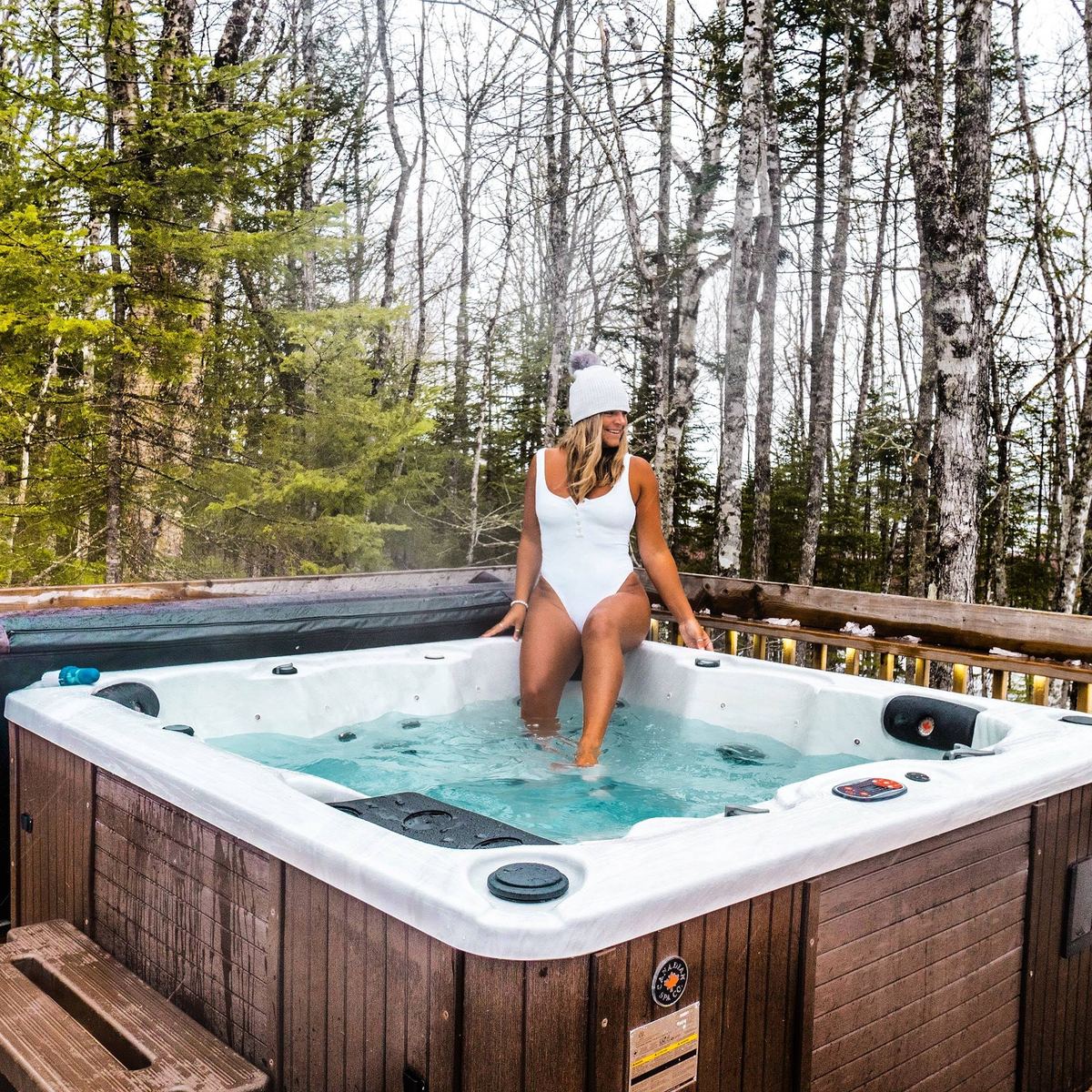
From 13-amp plug-and-play to 6-seat acrylic showpieces. Insulated for the British winter, and ready to run on your patio.
Train, recover, soak. Dual-temperature models available.
Barrel & infrared. Built to outlast the cabinet.
Made-to-measure 5″ tapered covers. UK stock, quick turnaround.
Water-care essentials. UK dispatch, usually next-day.
1986
We started in a country where water freezes for six months of the year.
Canadian Spa Company was founded in 1986 on a simple idea: if you're going to build a hot tub, build one that works when you actually need it — in February, at eleven at night, with frost on the cover and snow on the shoulders. That meant engineering for real cold. Full-foam insulation right to the cabinet wall. Shells that flex without cracking. Heaters that climb back to temperature after a minus-twenty overnight.
Four decades on, that same engineering heritage is delivered, installed and serviced from our UK base in Redhill, Surrey — ten minutes from Gatwick. A British winter is hardly the toughest test our spas have ever been designed for, and your garden deserves something that was engineered for worse.
From a single hot tub on a showroom floor to grandchildren splashing in his own back garden — the people behind Canadian Spa Company haven't changed.
Troy starts out on the sales floor in Canada — sleeves rolled up, name badge on, selling the first hot tubs that would become a four-decade career.

On site at the factory, hands on the plumbing — Troy oversees the launch of Canadian Spa Company's first swim spa, the product that would redefine what the brand could do.

Forty years on — grandchildren in the water with him. The product Troy started selling in 1986 is the same one that now brings his family together every weekend.
After four decades in the industry, his pitch isn't about jets or jet counts. Watch the 60-second reel.
Watch on Instagram →Read the full storyIt was never about selling hot tubs. It was about giving families a place to actually be together.
— Troy Labelle, founder
GLACIER AO₃P
The cleanest water in the industry, with the fewest chemicals — because our founders learned what clean water looked like from the lakes they grew up on.
Continuous low-level sanitation released into the flow. No added odour, no chemical burn.
On-board ozone generator oxidises contaminants on every circulation cycle.
Ultraviolet chamber neutralises microorganisms as water passes by — silently, constantly.
Antimicrobial plumbing built into the spa itself — not a spray-on afterthought.
WARMTH THAT STAYS.
Four layers of insulation, designed for Canadian winters. You notice them most when the temperature drops and the bill arrives.
5″ tapering to 3″, rated for heavy snowfall and shaped to shed pooling water. Most competitors run 4″→3″ or 4″→2″. Heat rises, so the cover does the most work.
Silver IR-reflective foil on panels and base — like the blanket thrown around a marathon finisher — bouncing cabinet heat back toward the water instead of the garden.
High-density foam bonded to the shell itself — superior insulation per unit of density, applied where the water meets the cabinet.
Cabinet cavity kept open on purpose. Motor waste heat stays in the spa and feeds the air injection, instead of pulling freezing outside air into your back.
A decade ago we full-foamed the cabinet, the way some competitors still do. On paper it looks thorough. In practice it took away the one thing a cold-climate spa needs most: somewhere for the motor's waste heat to go.
Turn on air injection in a fully-foamed spa and the jets have nowhere to draw air from except the outside. In a Canadian February, that means pumping −15 °C air straight into 38 °C water. You feel it within minutes — the spa goes cold.
Our spas draw air from inside the heated cavity instead. Even with full air injection running, you'll typically lose only 1–2 °C over a 45-minute soak — no compromise between a lively, frothy water flow and a warm one.
Why UK homeowners are turning the bottom of the garden into a steam room. Heat, ritual, recovery — a different kind of escape five steps from the back door.
Read The Piece →A balcony in Hackney or a paddock in the Cotswolds — same kit, different install. What it actually takes to put one in, and why footprint matters less than you think.
Read The Piece →The cheapest thing on the spec sheet and the single biggest factor in your monthly bill. Why thickness, taper and a vapour barrier matter — and what a thin cover really costs you.
Read The Guide →You are viewing Hot Tubs UK, Swim Spas & Saunas. Canadian Spa Company UK supports customers across hot tubs, swim spas, saunas, replacement hot tub covers, spa chemicals, filters, parts and servicing. This section provides practical guidance so buyers can compare the right products, understand long-term running costs and make better decisions for UK climate conditions, patio sizes and year-round use.
When comparing hot tubs for sale UK customers often focus first on price, but long-term value depends on insulation quality, heater efficiency, cover fit, shell build, control system reliability and local support access. A model with stronger thermal efficiency can reduce ongoing electricity usage and can remain more stable in colder weather. If you are choosing between cheap hot tubs UK listings, compare specification depth and support availability, not just headline cost.
For families and regular hosting, 6 seater hot tubs and larger multi-zone seating layouts often provide better flexibility. For smaller gardens or couples, compact formats can still deliver effective hydrotherapy if jet placement and pump performance are matched to intended use. If your goal is recovery and exercise rather than relaxation only, a swim spa can offer resistance training and all-season low-impact movement while still providing warm-water therapy.
Sauna buyers should compare cabin dimensions, heater type, wood quality, electrical requirements and placement options. Infrared and traditional sauna experiences differ in heat profile and warm-up behaviour; the best option depends on usage frequency, preferred temperature range and installation constraints. For many homes, planning ventilation and safe electrical supply early prevents installation delays.
Replacement covers, filters and water treatment also have a direct effect on running cost and comfort. A high-quality replacement hot tub cover reduces heat loss, helps water stay cleaner and lowers heater workload. Correct filter fit and regular chemical balancing support water clarity and bather comfort while reducing wear on pumps and heater components. If a spa is underperforming, service checks for flow, seals, valves and sensor status usually identify causes quickly.
For ownership planning, treat total cost as purchase price plus electricity, consumables, maintenance and occasional replacement parts. Preventive maintenance is normally lower cost than reactive repair. Seasonal checks, circulation health, cover condition and calibration reviews can reduce downtime and extend product life. If you need help deciding what to buy or how to maintain existing equipment, use the category links below to move directly to relevant products and support pages.
How much does a hot tub cost in the UK?
Up-front cost varies by size, jet count, insulation quality and controls. Compare specification, warranty and long-term energy efficiency together for a realistic value view.
Which hot tub size is best for home use?
Choose based on regular user count, patio footprint and intended use. 4-person formats suit compact spaces, while 6-seater options suit families and social use.
Are cheap hot tubs good value?
They can be, if build quality, insulation and after-sales support are strong. Low purchase price without reliable support can increase long-term ownership cost.
How often should filters and chemicals be checked?
Routine water care should be checked frequently with filters cleaned on schedule. Consistent maintenance helps avoid clarity issues and protects system components.
When should I book servicing?
Book service for persistent heat loss, leak signs, circulation issues, control errors, unusual noise or before/after heavy seasonal usage periods.
Please wait...